
Paradise Valley Day Trip from Taghazout — The Complete Local Guide (2026)
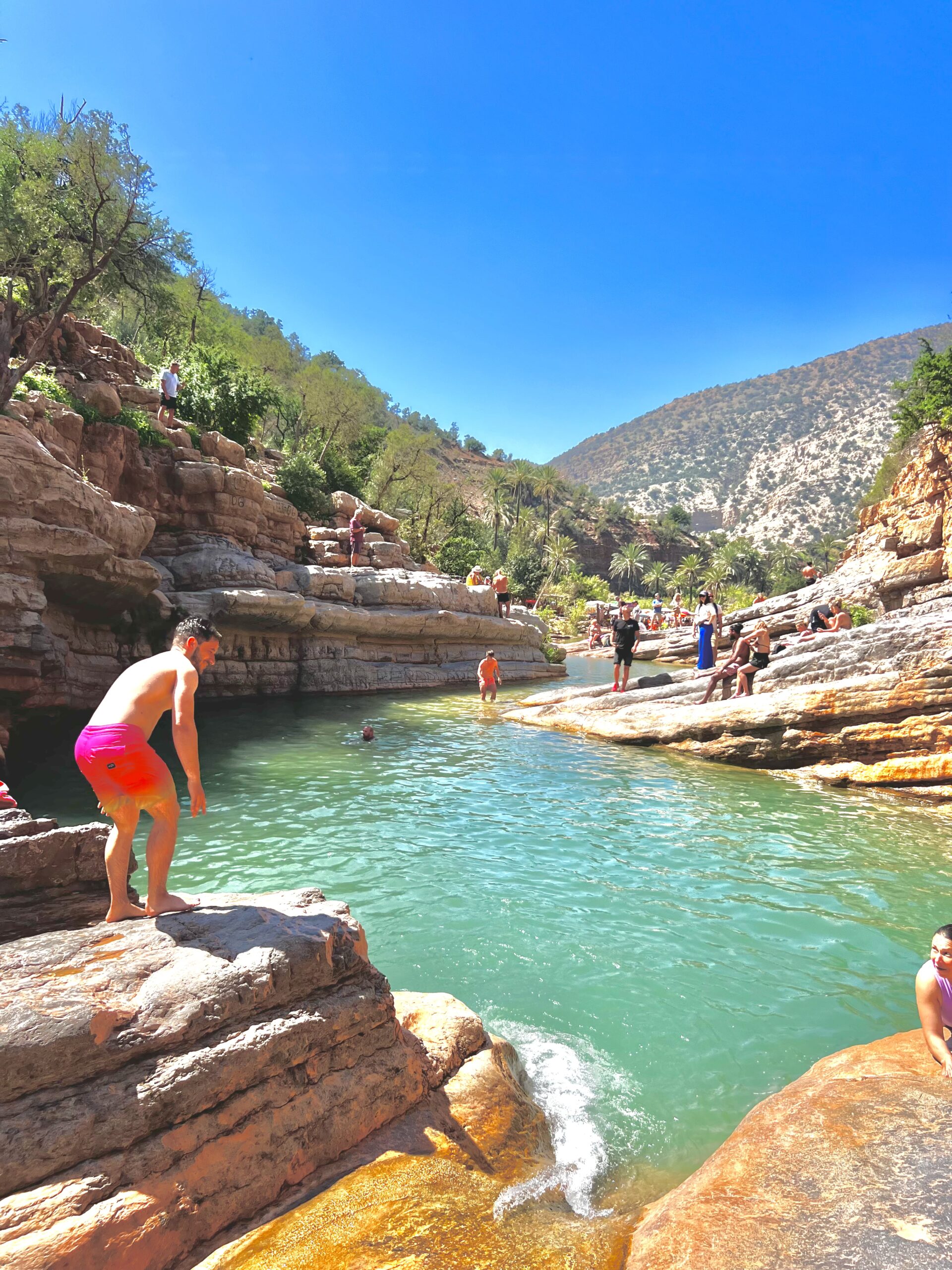
Forty minutes from Agadir, just inland from the Atlantic coast, the landscape changes completely. The scrubland gives way to a canyon, the canyon opens into a gorge lined with palm trees, and at the bottom there are cold, clear natural pools surrounded by rock cliffs. This is Paradise Valley — and the name is not an exaggeration.
Looking for the complete guide? This article covers the basics. For our full breakdown — including Tizgui Hidden Valley, seasonal swimming conditions, the Paradise Valley vs Tizgui comparison, and 25 answered questions — see our complete Paradise Valley Morocco guide.
Whether you’re based in Taghazout or Agadir, Paradise Valley is the single best day trip you can do from the coast. This guide tells you everything: how to get there, what to expect when you arrive, where the best pools are, what the Tizgui trail looks like, how to visit in summer without being uncomfortable, and what to bring. Written from direct experience — we’ve guided hundreds of visitors here and know it well.
Still deciding whether to go? The most common question visitors ask us first: is Paradise Valley worth it? — answered honestly, season by season.
What Is Paradise Valley — and Is It Worth the Trip?
Paradise Valley is a natural gorge in the foothills of the Atlas Mountains, about 35 km from Agadir and 25 km from Taghazout. The gorge is carved by a river that — depending on the season — fills a series of rock pools ranging from shallow wading areas to deep, cliff-jump-worthy pools with drops of 5–8 metres.
The landscape is unlike anything else near Agadir. On the coast you have Atlantic beach. Twenty kilometres inland you have this: towering rock walls, wild palms growing out of crevices, the sound of moving water, and almost no development. Local Berber families have lived in the hills above the valley for generations and some still come down to the pools at weekends. On a quiet weekday morning, you can have it almost to yourself.
Is it worth it? Yes, without question — as long as you know what to expect. Paradise Valley is not a manicured tourist park. The path to the main pools involves scrambling over rocks and navigating a rough trail. The pools themselves have no facilities — no changing rooms, no lifeguards, no food stalls beyond one or two small stands. The reward for that rough edge is a setting that feels genuinely wild and spectacular. Most people who visit say it was the highlight of their trip to the Agadir region.
For a more detailed, season-by-season answer — including the summer question, the Tizgui comparison, and who should skip it entirely — read the dedicated guide: Is Paradise Valley worth it?
Where Is Paradise Valley? Location & How to Get There
Paradise Valley sits in the Atlas foothills, reached by taking the road northeast from Aourir (the small coastal town just south of Taghazout, also known as Banana Village). From the coast, the road winds upward through scrubland and the first signs of the mountains, passing small Berber settlements before the valley reveals itself.
Distance from Taghazout: approximately 25 km, 45–60 minutes by road Distance from Agadir: approximately 35 km, 50–60 minutes by road
Option 1: Self-Drive to Paradise Valley from Taghazout
The most flexible option. The road is paved and manageable in a standard car for most of the route, though the final approach involves narrow bends. There is informal parking near the valley entrance where local men will guide you in (a small tip of 10–20 MAD is expected). You can set your own pace, stay as long as you like, and stop at viewpoints along the route.
Navigation: search “Paradise Valley Agadir” in Google Maps — it will take you directly to the entrance area.
Option 2: Grand Taxi from Aourir
If you don’t have a car, the most practical local option is a grand taxi (shared taxi) from Aourir village. Grand taxis run a set route toward the mountains and can drop you near the valley entrance. The timing is irregular — they depart when full — so this option requires patience and flexibility. Agree on a return arrangement with the driver before you go, or be prepared to wait for a returning taxi. Useful for budget travellers with time to spare.
Option 3: Guided Day Trip with Taghazout Discovery
The most popular option for visitors based in Taghazout. We run guided Paradise Valley day trips from Taghazout. Transport, local guiding, and access to the Tizgui trail are all included. We take you to the best spots — including the quieter pools further in that most self-drive visitors miss — and handle everything from pickup to drop-off.
For first-time visitors, a guided trip means less planning, no navigation stress, and the benefit of a local who knows which pools are swimming-ready on any given day depending on season and rainfall.
★★★★★
5.0 Rated on Google
Based on 230+ reviews
“
A perfect blend of nature and comfort. The hospitality here really stands out—you can feel the care and attention given to every guest.
Z. A., Google review, April 2026.
230+ Google reviews
What to Do in Paradise Valley
Swim in the Natural Rock Pools
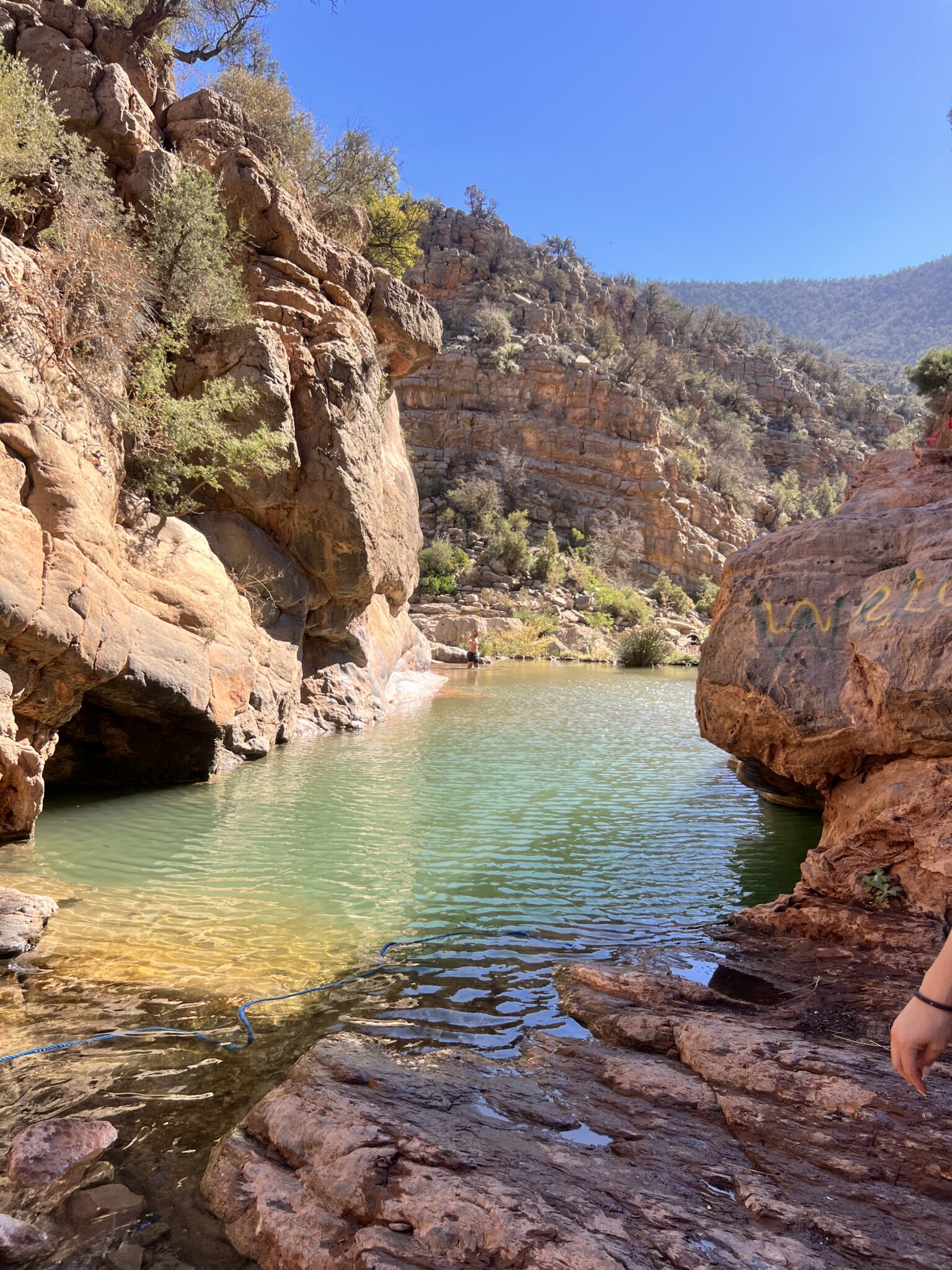
This is the main event. Paradise Valley’s rock pools are carved into the gorge floor by the river and vary from one season to the next. In spring (March–June) and after autumn rainfall, the pools are deep, cold, and crystal clear — some reaching 3–4 metres in depth. In summer the levels drop, but the main pools usually retain enough water to swim in.
The water is cold by Moroccan standards — especially in spring. Most people are shocked by it for the first few seconds, then can’t get out. Bring a towel you don’t mind getting sandy and wet.
Cliff Jumping — What You Need to Know First
Paradise Valley is known locally as a cliff jumping spot. The rocks above certain pools create natural platforms of varying heights — from 2–3 metres for first-timers up to 8+ metres for those who want a serious drop. It’s genuinely exhilarating.
A few things to know before you jump: check the pool depth before jumping, especially in summer when water levels are lower. Only jump from spots that are locally known to be safe — this is another good reason to come with a guide. Never jump from an unfamiliar spot without checking the depth and clearing the landing zone below. Cliff jumping is a real risk; treat it as such.
Hike Deeper Into the Valley
Most visitors stop at the first pools and leave. If you walk 20–30 minutes further into the valley, the crowds thin completely and the scenery improves. The path becomes less defined the further you go — it’s a scramble over boulders and through narrow passages rather than a formal trail — but the reward is pools that are often empty and a canyon that gets progressively more dramatic. Wear proper shoes for this. Flip-flops are dangerous on wet rock.
The Tizgui trail continues even further — see the next section.
Visit a Local Argan Garden
Along the route between the coast and the valley, you’ll pass small argan oil cooperatives. These are genuine operations — not tourist shops — where argan oil is hand-pressed using traditional methods. A stop here takes 20–30 minutes, is usually free, and gives you the option to buy fresh oil at fair prices.
Argan oil from the Atlas foothills is among the best available — both culinary argan oil (nutty, used in Moroccan cooking) and cosmetic argan oil. If you’re buying, this is the right place to do it.
Want to combine Paradise Valley with the best pools, the Tizgui trail, and a stop at a local argan garden? Our guided trips cover all of it. Book your Paradise Valley day trip from Taghazout trip here.
Tizgui Village — Paradise Valley's Best-Kept Secret
About 10 km beyond the main Paradise Valley pools, following the valley road deeper into the Atlas foothills, there is a small Berber village called Tizgui. Most visitors to Paradise Valley never reach it. Almost no tourist guide mentions it. This is what makes it worth knowing about.
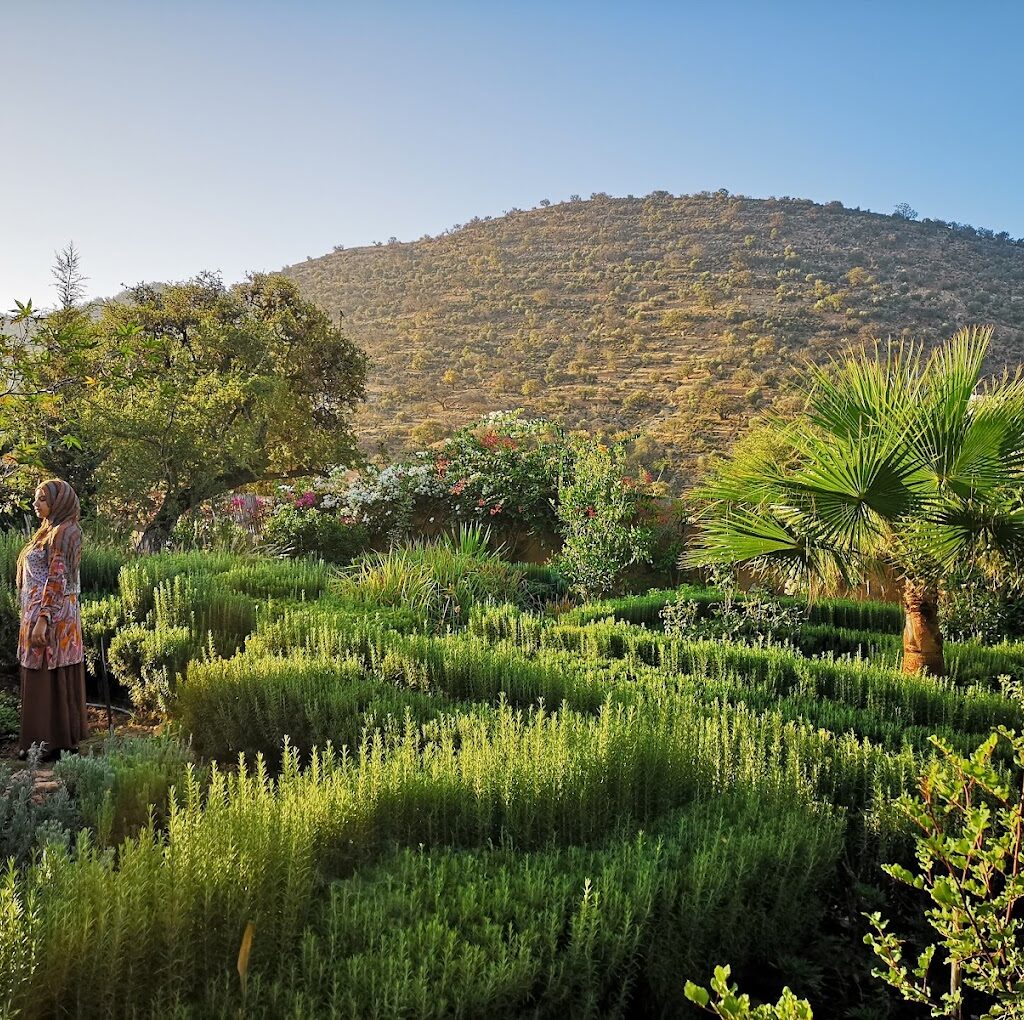
Tizgui is a working mountain village — mud-brick houses, terrace gardens, goats, the smell of woodsmoke, children playing in the street. It sits in a wider part of the valley where the gorge opens up and the mountains feel enormous around you. The village has natural water sources that stay active longer into the dry season than the main Paradise Valley pools, making it a viable swimming destination even when the lower pools have dropped.
What makes Tizgui genuinely special isn’t a particular attraction — it’s the complete absence of the tourist infrastructure that surrounds most “hidden gems” in Morocco. Just a village going about its day in one of the most beautiful mountain settings in the region.
Some visitors, on arranged trips, share a simple home-cooked lunch here with local families. If this is available on your trip, take it. It’s the kind of experience that doesn’t exist on GetYourGuide.
Access to Tizgui is not straightforward without local knowledge. The road is rough in sections and the village is not signposted from the main Paradise Valley entrance. This is one of the experiences that separates a guided trip from a self-drive visit. Our guided Paradise Valley trips include the option to visit Tizgui (including local lunch).
⭐ 5.0 on Google · Top Rated Local Guides · Small Groups · 230+ Reviews · Daily Departures · Pickup from Taghazout, Tamraght & Agadir
Best Time to Visit Paradise Valley
Spring (March to June) is the best time. The Atlas snowmelt fills the valley river, the pools are deep and cold, small waterfalls appear in sections that are dry the rest of the year, and the vegetation around the gorge is at its greenest. The temperature is warm enough to swim comfortably without being brutally hot. This is the classic Paradise Valley experience.
Autumn (September to November) is the second-best window. The summer heat has passed, rainfall returns to the mountains, and the crowds from the Moroccan summer holidays have thinned. Water levels vary but are usually good after October.
Winter (December to February) is possible and can be spectacular after heavy rain — waterfalls running, the canyon green and dramatic — but the water is genuinely cold and the drive can be challenging in poor weather.
Summer (June to September) brings the most visitors and the lowest water levels. The valley is still worth visiting in summer, but come early (before 9AM) to avoid both the midday heat and the weekend crowds. The pools closest to the entrance can drop to waist depth by August; the pools further in, and around Tizgui, tend to hold more water. Water temperature in summer is refreshing rather than shocking. Inland temperatures at the valley can reach 35–40°C by midday, so an early start isn’t optional — it’s important.
What to Bring and What to Wear
Footwear is the most important thing. The trail to the pools and through the valley involves scrambling over wet, uneven rocks. Flip-flops are genuinely dangerous here — people slip and get hurt every season. Wear trainers, hiking shoes, or sandals with a proper sole and ankle support. Shoes you don’t mind getting wet are ideal.
What to bring:
- Swimwear (and a towel — there are no rentals)
- At least 1.5 litres of water per person — the valley has no reliable drinking water on site
- Snacks or a packed lunch — the options near the pools are limited to one or two small stands selling drinks
- Sunscreen — the valley faces south and the reflected heat off the rocks is intense
- A small backpack or dry bag if you plan to go further in
- Cash (MAD) — parking, local stands, and the argan cooperative are all cash-only
What not to bring: Glass bottles (risk on rocky terrain), anything you’d be upset to get wet, expensive cameras without protective cases.
Dress code: The valley is a natural site, not a mosque or medina. Swimwear is completely normal at the pools. However, on the walk to and from the entrance, a light layer over your swimwear is respectful, especially if the village nearby is busy.
Is Paradise Valley Good for Families and Kids?
It depends on the ages involved. For families with children aged 8 and above who are comfortable on uneven terrain and not afraid of cold water, Paradise Valley is excellent — kids love the cliff jumping (at appropriate heights), the swimming, and the dramatic setting.
For very young children (under 5–6) or anyone with significant mobility limitations, the main challenge is the access path to the pools: it involves a 15–20 minute walk over rocky, uneven ground with some scrambling involved. There are no paved paths, no handrails, and the rocks can be wet and slippery near the pools. It is manageable for most adults with care, but not comfortable with a pushchair or for anyone who struggles with uneven ground.
The pools themselves have no lifeguards and variable depths — parents need to actively supervise children near the water. The shallow, calmer areas of the larger pools are suitable for non-swimmers to wade; the deeper sections and cliff-jump areas are for confident swimmers only.
If you’re travelling with mixed ages, a guided trip is the most practical option — your guide can lead the group at the right pace and advise on which pool areas are appropriate for children on the day.
Combine Your Visit: Paradise Valley + Other Taghazout Experiences
Paradise Valley works best as one element of a broader Taghazout experience. Here’s how visitors typically combine it:
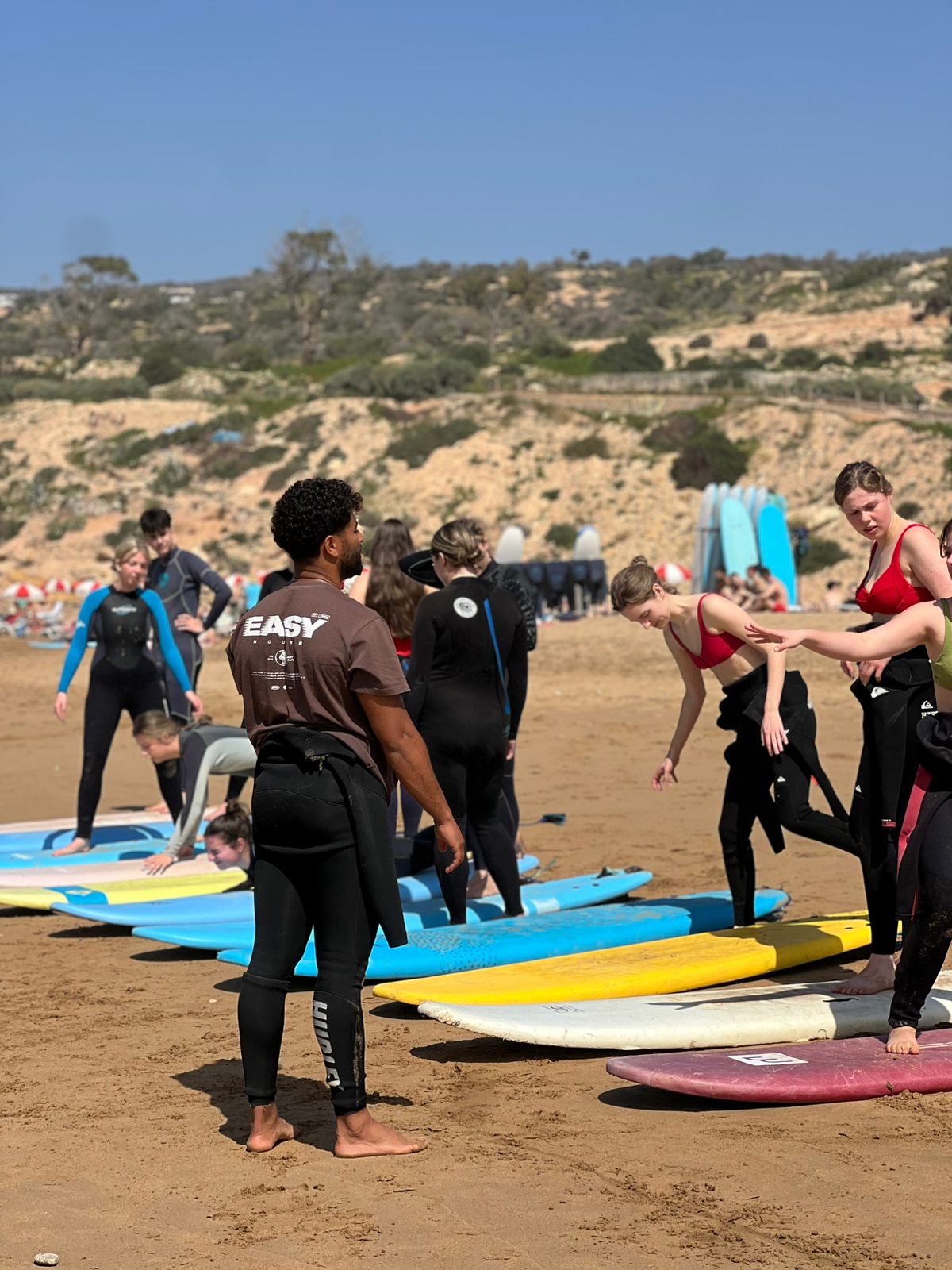
The classic two-day plan: Day 1 is a surf lesson in Taghazout; Day 2 is the Paradise Valley day trip. You see the Atlantic from the water on day one, and the Atlas from the gorge on day two. The contrast is what makes it memorable.
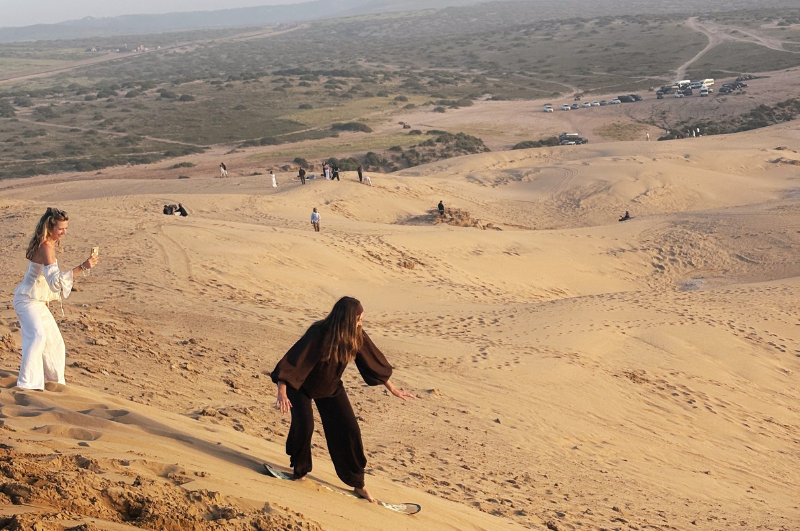
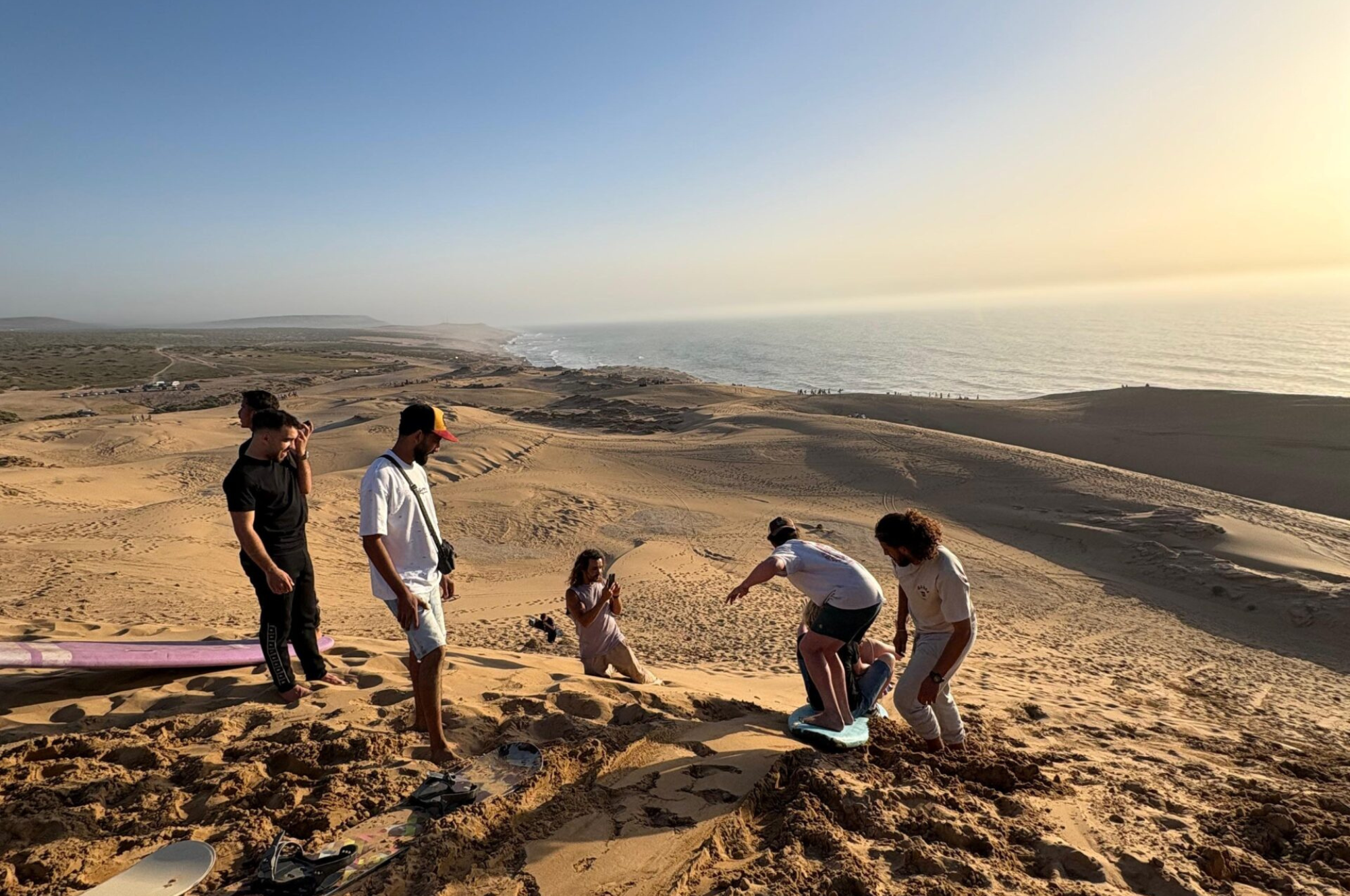
The non-surfer experience: Combine Paradise Valley with sunset sandboarding at the Timlalin Dunes for a trip that covers three completely different landscapes — ocean, dune, and mountain — without leaving the Taghazout region. The full sandboarding guide explains what to expect.
For the full picture of what to do from your base, see our complete guide to activities in Taghazout.
Why Go with a Local Guide?
The short answer: you’ll see more, worry less, and have a better day.
The longer answer: Paradise Valley looks simple from the road, but the best spots — quieter pools, the Tizgui trail, the argan stop on the way back — aren’t obvious without local knowledge. Self-drive visitors typically park, walk to the first pool, swim, and leave. Guided visitors do all of that plus the 30-minute walk to the empty pools further in, plus the Tizgui extension if they want it, plus a proper lunch stop.
We also know what the water is like on any given day depending on recent rainfall, which pool sections are swimming-ready, and which jumping spots are safe. That’s not information on any website — it comes from being here regularly.
Taghazout Discovery is rated 5 stars on Google, TripAdvisor, and GetYourGuide. We run small groups. Transport, guiding, and access are all included in the trip price.
Any questions? Send us a message on WhatsApp — we reply fast and can help you plan the day around your schedule.
★★★★★
5.0 Rated on Google
Based on 230+ reviews
“
Went to Paradise Valley with a group and we had a very beautiful day! Our tour guide the nicest and friendliest dude. 5/5 would totally recommend!
Oggie, Google review, March 2026.
230+ Google reviews
Frequently Asked Questions - Paradise Valley Day Trip from Taghazout
How far is Paradise Valley from Taghazout?
About 25 km by road — roughly 45–60 minutes depending on traffic and stops. The route passes through Aourir (Banana Village) and winds up into the Atlas foothills. The drive is scenic and part of the experience.
How far is Paradise Valley from Agadir?
Around 35 km, or 50–60 minutes from Agadir city centre. It’s one of the most accessible nature day trips from Agadir and is consistently ranked as the top non-beach experience in the region.
Is there an entry fee for Paradise Valley Morocco?
No, access to Paradise Valley is free. There is no entrance gate or ticket booth. You may be asked for a small parking contribution (10–20 MAD) at the informal parking area near the entrance — this goes to local men who manage the parking. Some small drink stands near the pools charge normal market prices.
Can you swim in Paradise Valley?
Yes — swimming is the main reason to visit. The pools are natural, carved by the river, and range from shallow wading areas to deep pools of 3–4 metres. Water levels vary by season: deepest in spring (March–June) after Atlas snowmelt, lowest in late summer (August–September). The water is cold even in summer — refreshingly so.
Is cliff jumping safe at Paradise Valley?
Cliff jumping is possible at Paradise Valley and popular with visitors. The main pools have jumping points ranging from 2–3 metres (beginner-friendly) up to 8+ metres (advanced). Safety depends on checking the pool depth before each jump and only jumping from spots that are known to be clear — especially in summer when water levels can be lower than previous years. We strongly advise against jumping from unfamiliar spots without checking with someone who knows the pool on that particular day. Our guides will advise on safe jumping spots during guided trips.
How long should I spend at Paradise Valley?
Most visitors spend 2–2.5 hours at the pools themselves. A full day trip from Taghazout, including transport and stops along the way, typically takes 4–5 hours. If you’re extending to the Tizgui trail, allow 5-6 hours.
Do I need a guide to visit Paradise Valley?
No — you can visit independently by car or grand taxi from Aourir. However, a local guide significantly improves the experience: you’ll access quieter pools, the Tizgui trail, and the argan garden, and avoid the most crowded areas. For first-time visitors, the guided option also removes all transport and navigation stress.
What is the best time to visit Paradise Valley?
Spring (March–June) is the best window — pools are full, small waterfalls appear, and the valley is green. Autumn (September–November) is second best. Summer is possible but hot (inland temperatures can reach 35–40°C by midday) — visit early if you go in summer. Weekdays are always quieter than weekends, which draw large Moroccan family groups.
What is Tizgui Village?
Tizgui is a small traditional Amazigh (Berber) village located about 10 km beyond the main Paradise Valley pools, deeper in the Atlas foothills. It’s less visited than the main valley area and offers a genuinely quiet, local experience — natural pools with better water retention in dry seasons, mountain scenery, and the chance to see authentic village life without tourist infrastructure. Our guided trips include the Tizgui extension on request.
Is Paradise Valley suitable for children?
Yes, for children aged 8 and above who are comfortable on uneven terrain. The access path involves scrambling over rocks and is not suitable for pushchairs or very young children. The shallow areas of the main pools are suitable for supervised non-swimmers. There are no lifeguards. We advise against the deeper pools and cliff-jumping areas for children under 10.
Can I combine Paradise Valley with surfing or sandboarding?
Yes — this is one of the most popular ways to experience the Taghazout area. A surf lesson in the morning and Paradise Valley the following day is a classic two-day plan. We also offer combinations of Paradise Valley and sunset sandboarding at the Timlalin Dunes. Ask us about custom day plans when you contact us.
How do I book a guided Paradise Valley trip from Taghazout?
See all options and book your Paradise Valley day trip directly here or message us on WhatsApp at +212 637 43 5718. Booking 24 hours in advance is recommended. We pick up from Taghazout and Tamraght and can arrange Agadir pickup on request.
Looking for more things to do in Taghazout?
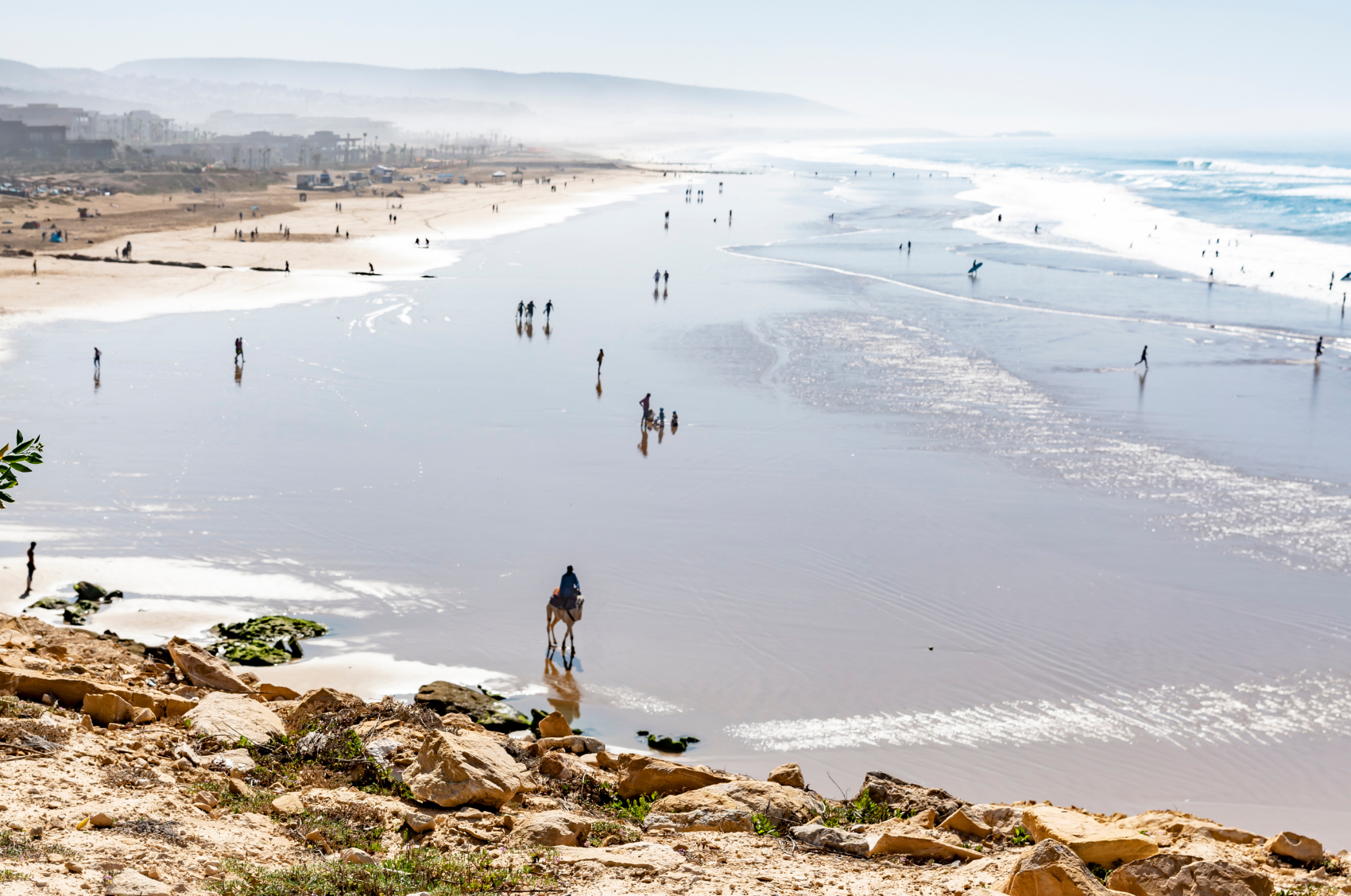
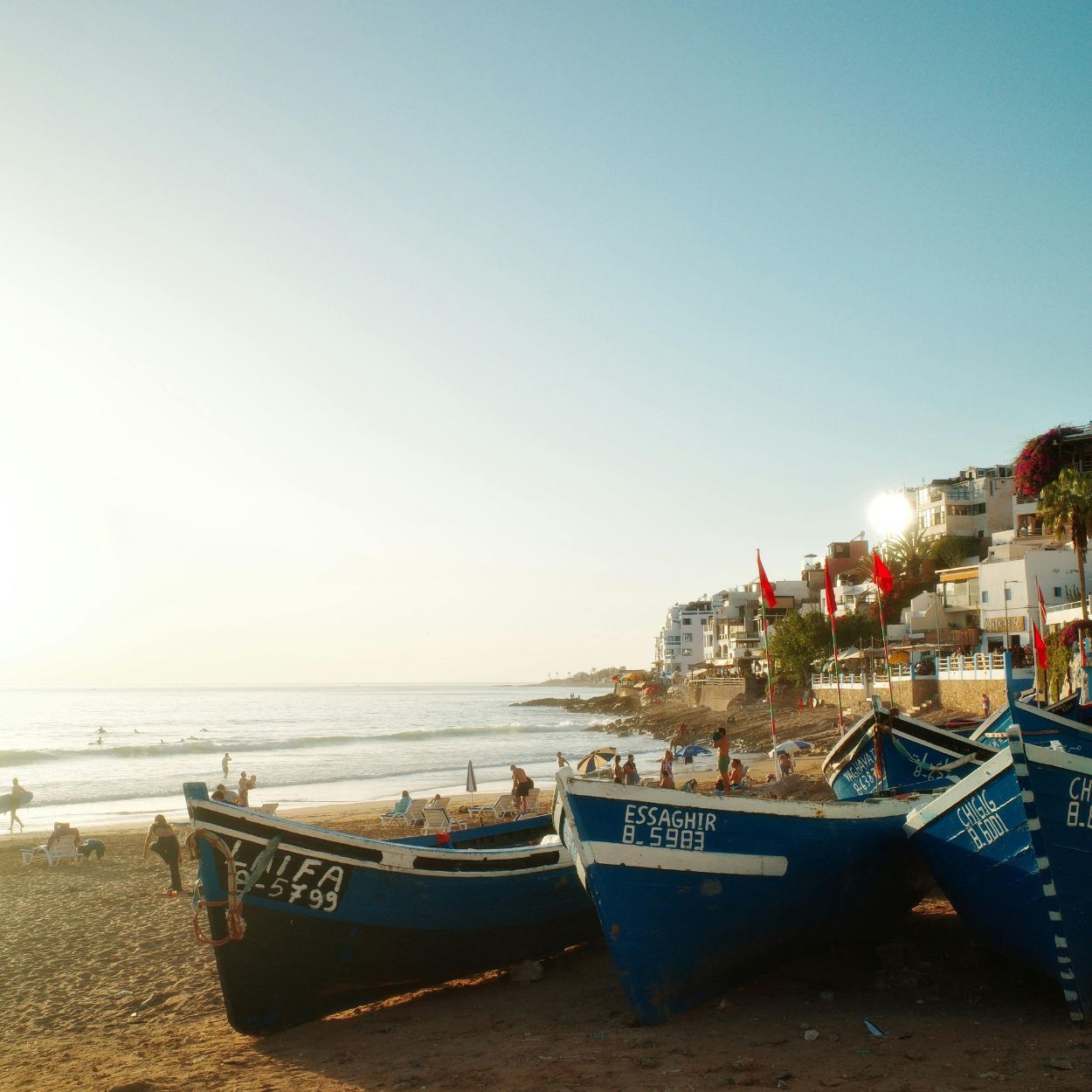
The iconic surf village Taghazout in Morocco has a lot to offer. You’ll find surf lessons, sandboarding tours, day trips, and other local experiences around Taghazout and Agadir. Check out these fun activities!
Surf Lessons in Taghazout
Learn to surf with a local instructor — beginner-friendly, board and wetsuit included, daily at 10:00.
Sandboarding in Taghazout
Ride the Timlalin dunes at golden hour — the most popular non-surf activity on the coast, daily at 16:30.
Things to Do in Taghazout
A complete guide to surf lessons, local activities & the best things to do in Taghazout. Discover exciting activities !



One thought on “Paradise Valley Day Trip from Taghazout — Local Guide (2026)”