Sandboarding or Surf Lesson Taghazout: Which Should You Choose?
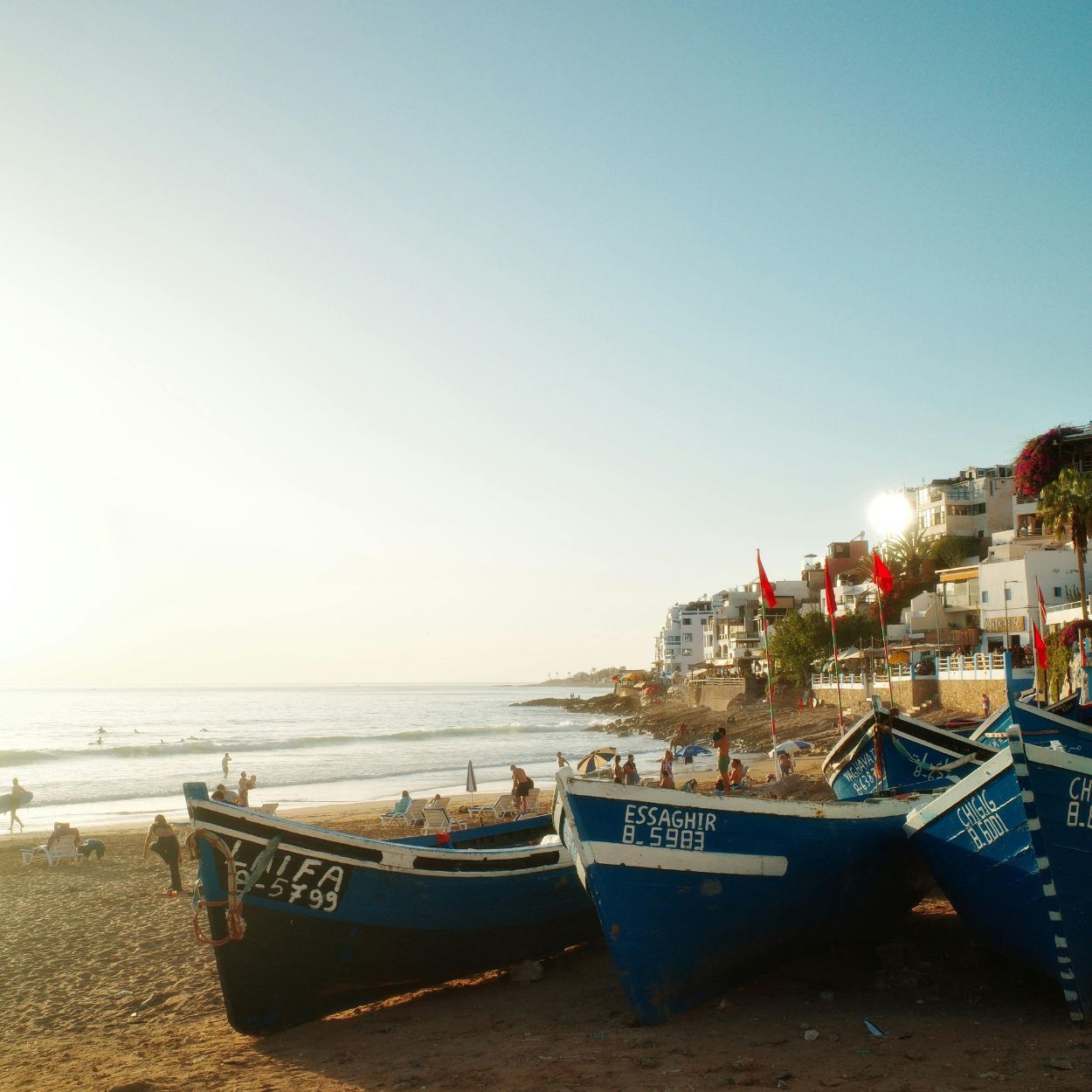
Taghazout has a reputation built on surfing. But talk to anyone who has spent more than a day here and they will almost certainly mention sandboarding in Taghazout too — the sunset trip to the Timlalin Dunes that comes up in conversation the way great meals do. Both activities are popular. Both cost the same. Both are genuinely beginner-friendly.
So if you are trying to choose between a surf lesson and sandboarding in Taghazout, you are asking a legitimate question. This guide gives you an honest comparison of both experiences and tells you exactly how to decide — including whether you actually need to choose at all.
Surfing vs. Sandboarding Taghazout: Two Different Activities, Two Completely Different Experiences
The first thing to understand is that surfing and sandboarding in Taghazout are not variations of the same thing. They are completely different in terms of environment, timing, physical demand, and what they feel like.
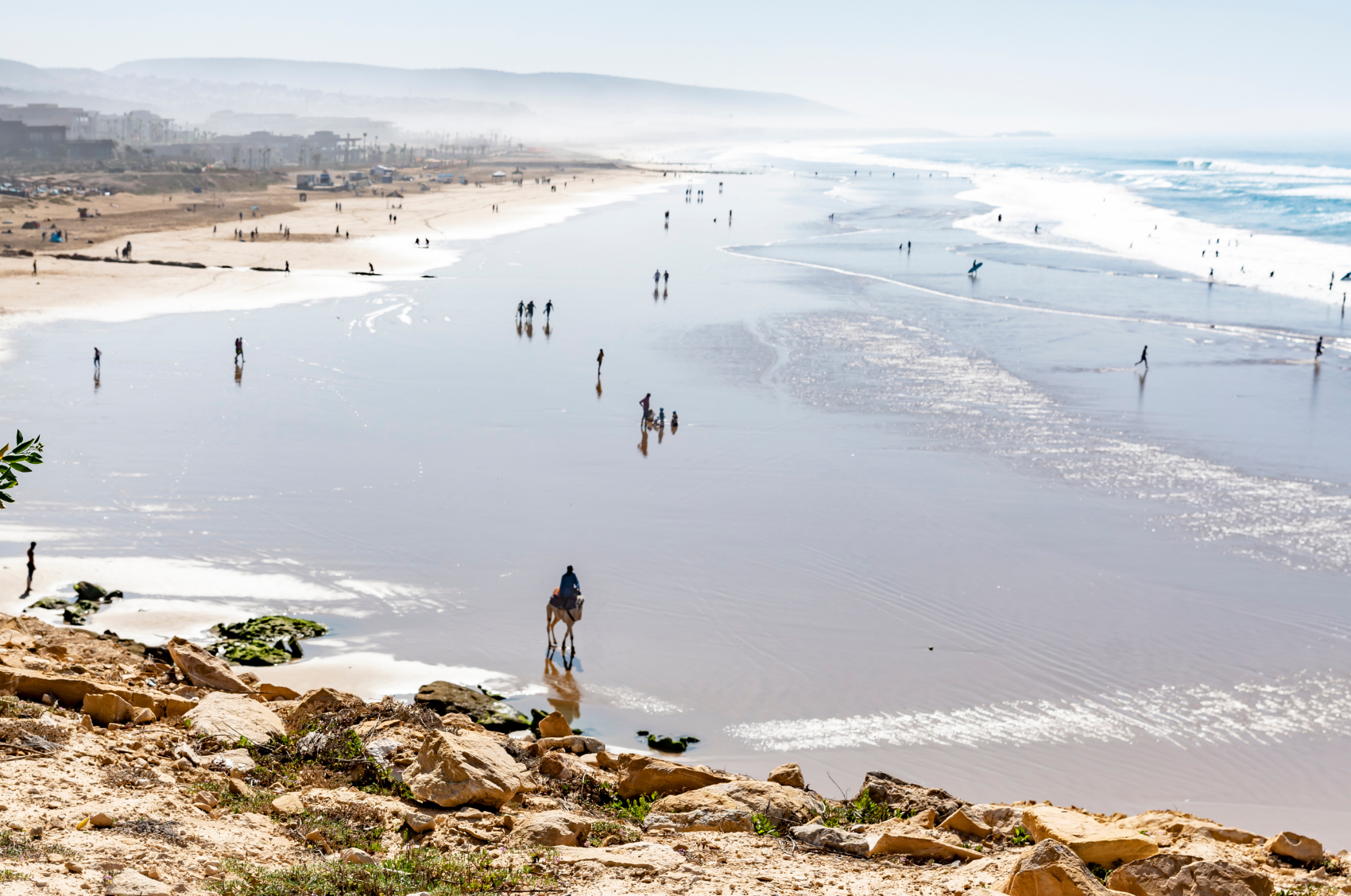
A surf lesson takes you into the Atlantic Ocean in the morning. You are wet, physically active, working with a coach, and spending your session catching waves on a surfboard. It is a sport. Progress requires effort and repetition.
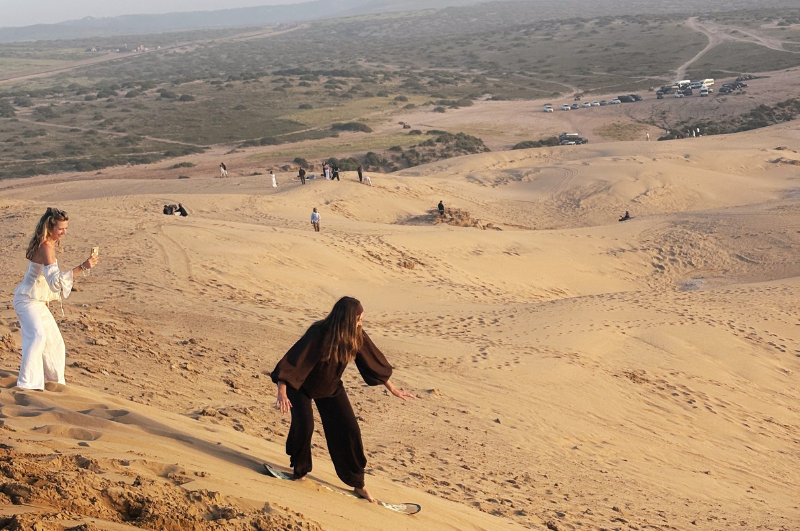
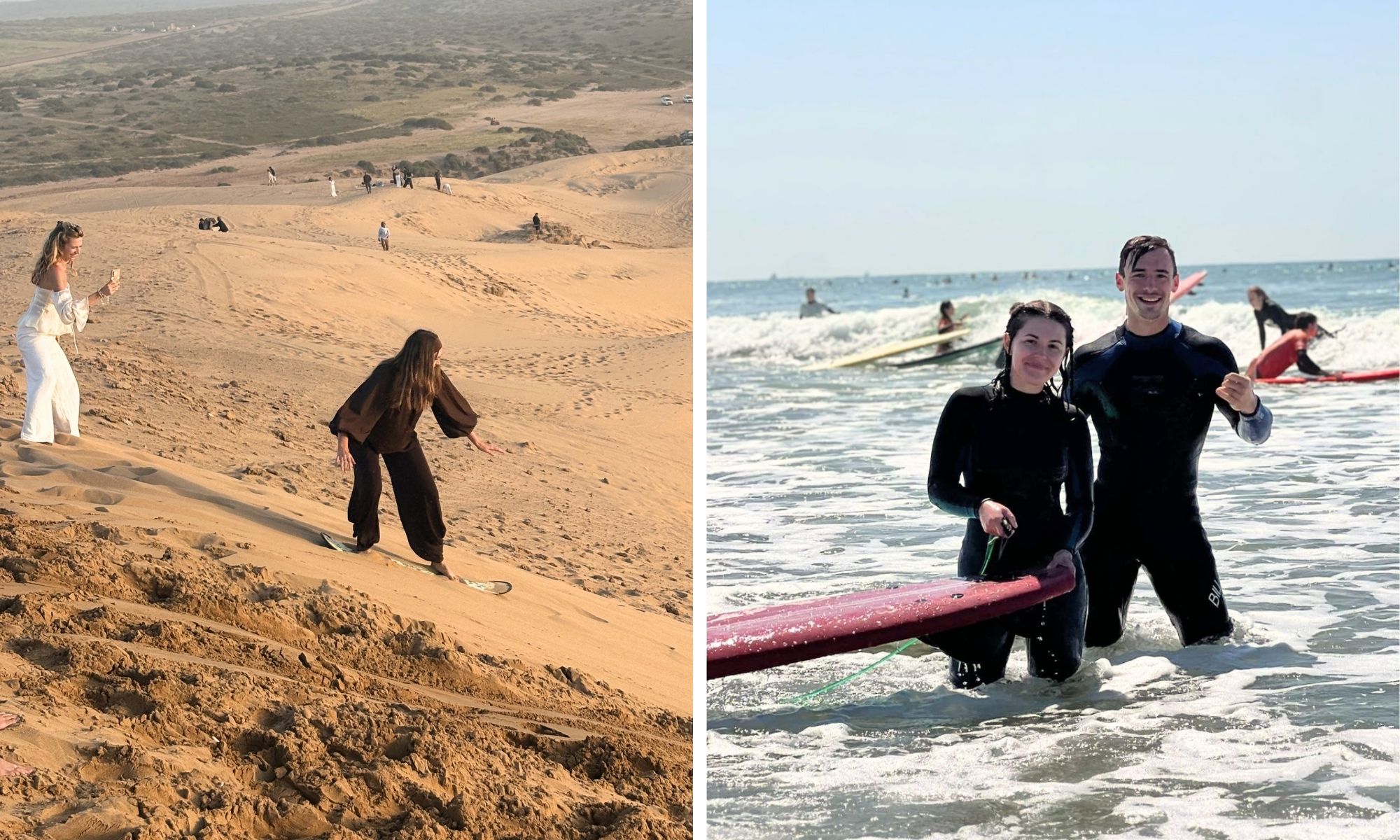
A sandboarding trip takes you to the Timlalin Dunes at sunset. You are in the desert above the coast, riding down sand slopes, stopping to take photos, drinking Moroccan tea at the end of the session. It is an experience. Progress is largely instant.
The comparison is really between activity and adventure — between learning a skill and absorbing a moment. Both are worth your time, but they satisfy different things. For a deeper look at what makes surfing in Taghazout so popular year-round, read our complete guide to surfing in Taghazout.
What Is a Surf Lesson in Taghazout Like?
What Happens During a Surf Lesson in Taghazout
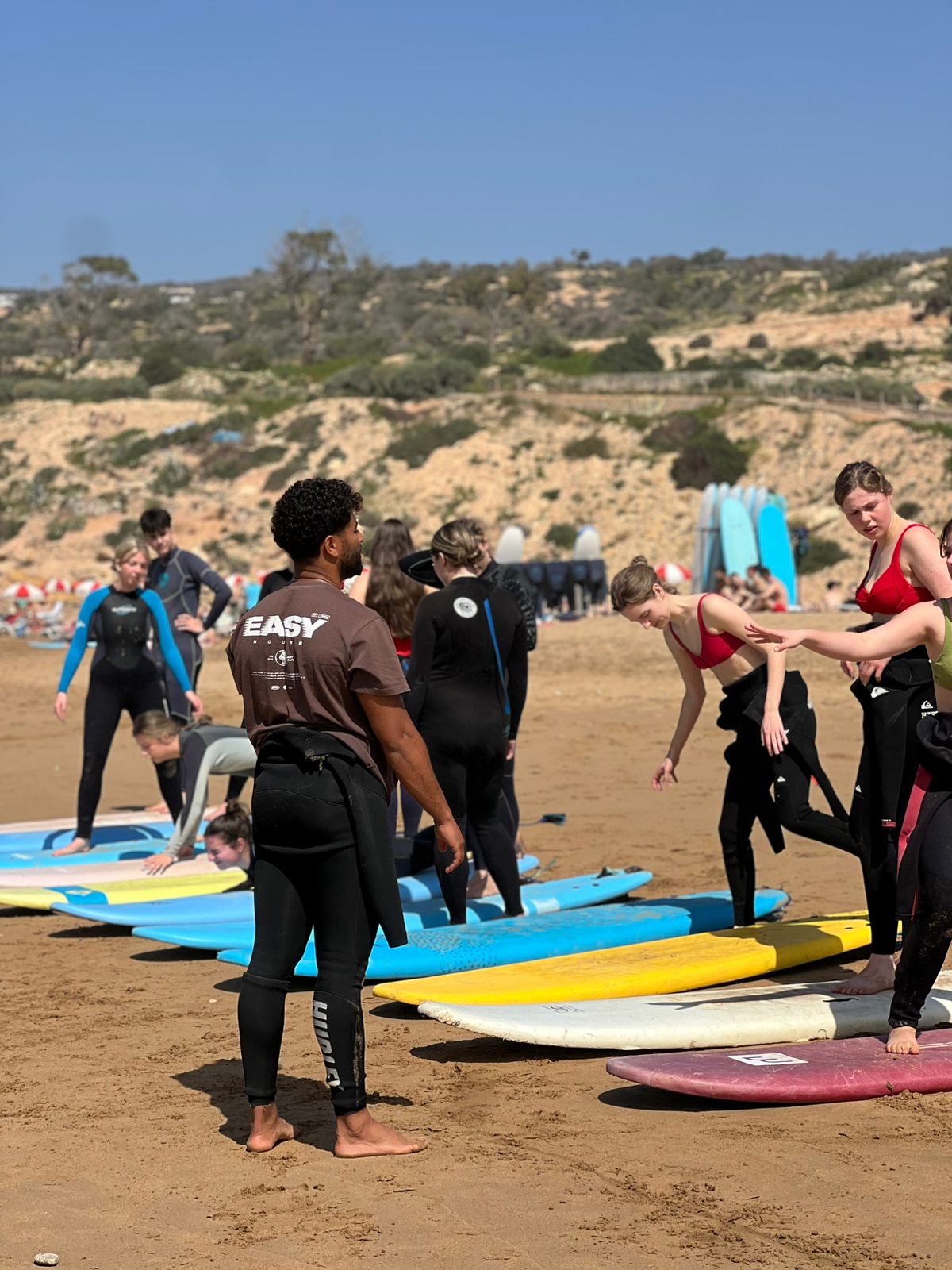
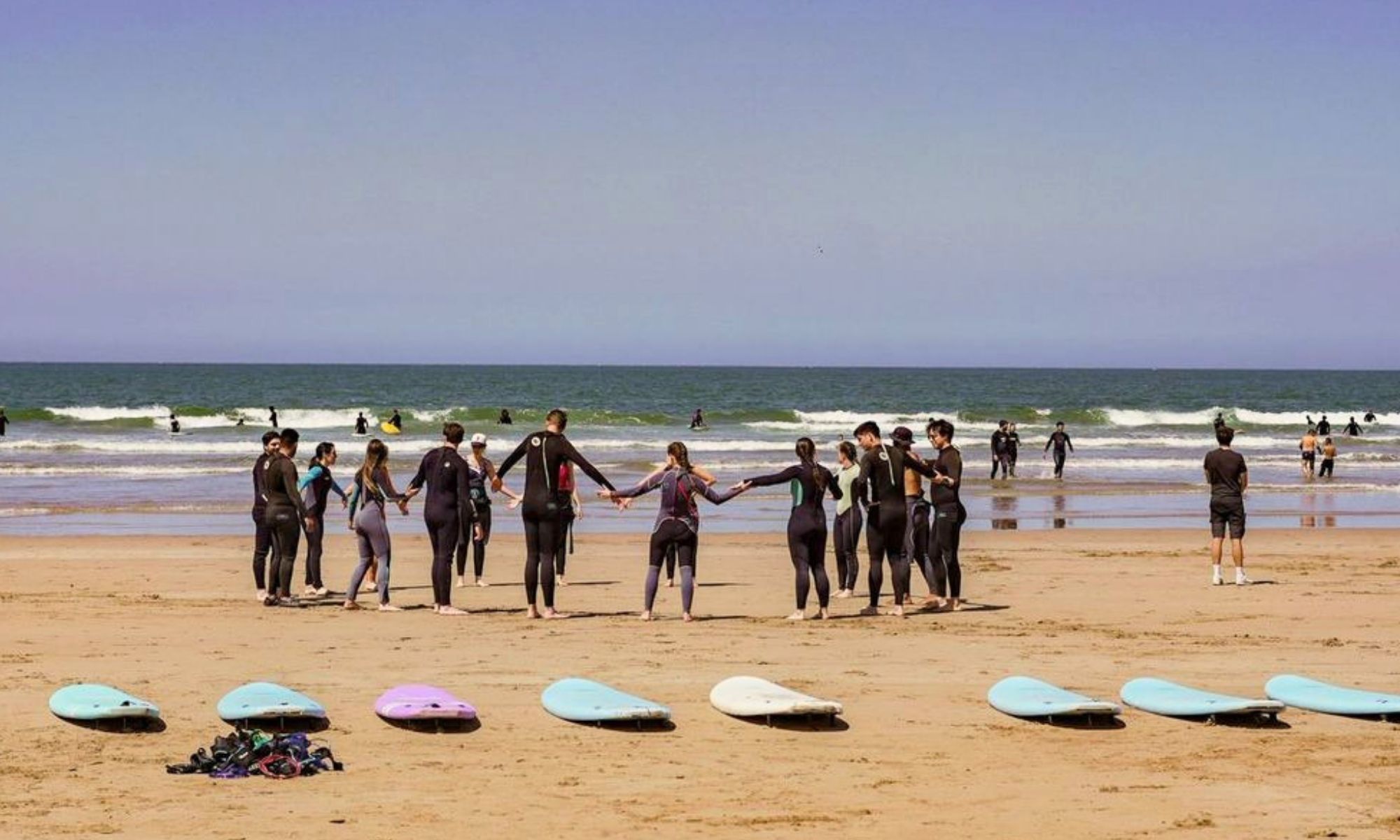
Every surf lesson begins on the beach. Before you go anywhere near the water, your instructor walks you through the basics: how to read a wave, how to position yourself on the board, how to do a pop-up (the move where you go from lying down to standing), and how to fall safely. You practice the pop-up several times on the sand. This is not filler — it is the most important part of the lesson.
When you enter the water, your instructor is in the ocean with you. They help you position yourself in front of incoming waves, push you off at the right moment, and give you real-time feedback on your technique. Small groups — maximum four to six people — mean more waves per person and more coaching per session.
For a full breakdown of what to expect, see our guide: what to expect from your first surf lesson in Taghazout.
How Long It Lasts and When It Runs
Surf lessons run daily from around 10:00 and last between 2.5 and 3 hours, including the beach coaching and water time.
Who It Is For
Surf lessons are ideal for complete beginners and people who want to try something physically engaging. You need to be comfortable in water. You do not need to be fit or sporty — but you do need to be willing to make an effort. The reward is riding a wave under your own power, which is something most people describe as surprisingly addictive after the first time it happens. For a complete overview of everything involved — spots, pricing, group sizes and what to expect — read the complete guide to surf lessons in Taghazout.
★★★★★
5.0 Rated on Google
Based on 230+ reviews
“
Had such an amazing surfing experience in Taghazout! I learned a lot and even managed to stand up on the board for the first time.
Tamara, Google review, May 2026.
230+ Google reviews
What Is Sandboarding in Taghazout Like?
What Happens During a Sandboarding Trip in taghazout
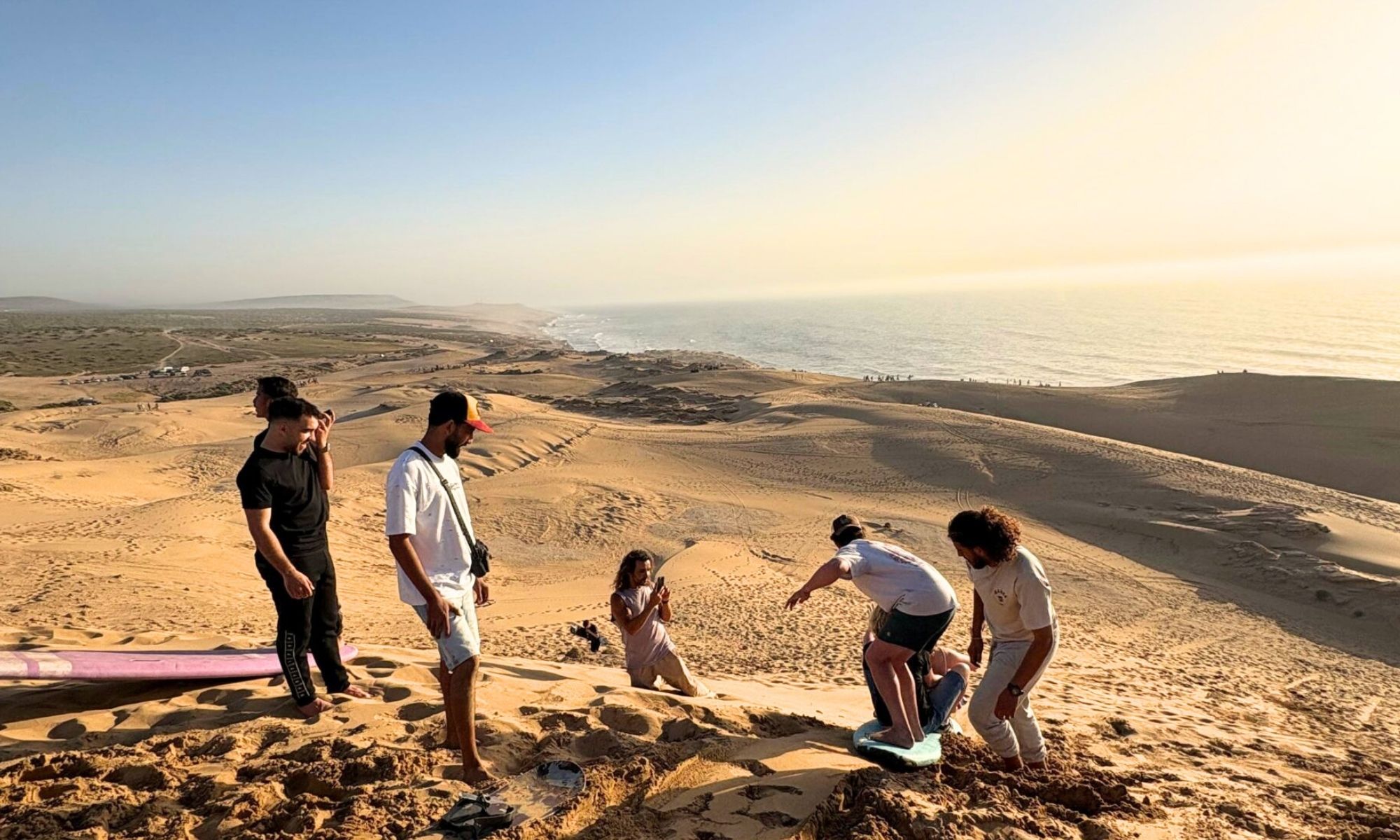
The sandboarding experience starts with a pickup from your accommodation in Taghazout, Tamraght, or Agadir at around 16:00–16:30. You drive north along the Atlantic coast, passing through the Aghroud Colour Village — a small community of painted houses that makes an unexpectedly good photo stop — before arriving at the Timlalin Dunes.
The dunes themselves are a genuine surprise. The combination of open desert, Atlantic Ocean views, and the golden late-afternoon light creates an atmosphere that most visitors do not anticipate from a sandboarding trip. You spend the session sliding down the dunes on a sandboard, at your own pace, with your guide on hand for help and photos. After the sandboarding session, there is Moroccan tea and a bonfire before the return drive.
The whole experience runs about 4.5–5 hours, including transport.
For a complete overview, read our complete guide to sandboarding in Taghazout.
How Long It Lasts and When It Runs
Sandboarding runs daily at 16:30. The experience lasts between 4.5 and 5 hours including the drive and return. You are back in Taghazout by around 21:00–21:30. For a full picture of the sunset experience and what to expect at the dunes, read our sunset sandboarding guide for Taghazout.
Who It Is For
Sandboarding is ideal for anyone who wants a memorable sunset experience without significant physical commitment. No experience is needed. No swimming ability is required. If you can walk up a sand dune and stand on a flat board, you can sandboard. It is particularly well-suited to groups, couples, and families — and to travellers who want a genuinely different side of Morocco without spending a full day on a long day trip.
Wondering if it is actually worth it? Read: is sandboarding in Taghazout worth it?
★★★★★
5.0 Rated on Google
Based on 230+ reviews
“
Did the dunes/sandboarding tour and it was amazing!! All of the guides had great energy and were so fun. Have been recommending it to everyone!
Katie, Google review, June 2026.
230+ Google reviews
Sandboarding vs. Surfing Taghazout: The Honest Comparison
Quick Comparison
| Surf Lesson | Sandboarding | |
|---|---|---|
| Price | €29 per person | €29 per person |
| Duration | 2.5–3 hours | 4.5–5 hours |
| Time of day | Morning (10:00) | Sunset (16:30) |
| Location | Atlantic Ocean | Timlalin Dunes |
| Experience needed | None | None |
| Physical effort | Moderate | Low |
| Skills learned | Yes — surfing basics | Yes – but it’s mostly a fun activity |
| Best for | Active learners | Groups, families, any level |
| Group size | Max 4–6 | Max 8 |
| Wetsuit needed | Yes (included) | No |
| Best season | Year-round | Year-round |
| Same-day combo? | ✅ Yes — with sandboarding | ✅ Yes — with surf lesson |
Physical Effort
Surfing requires more physical exertion than sandboarding. Paddling out, popping up, maintaining balance — these are active, full-body movements that will make you feel it in your arms and core the following morning, in the best possible way. It is not extreme effort, but you will work.
Sandboarding is genuinely low-effort. Walking up a sand dune is the most physically demanding part. The ride down takes seconds and requires no particular athletic ability. Most people do multiple runs and would happily keep going. For a closer look at how sandboarding safety compares to surfing for a first-timer, see our full sandboarding safety guide.
Time of Day
This is one of the most overlooked differences. A surf lesson is a morning activity. Sandboarding is a late-afternoon and sunset activity. Their schedules do not compete — they complement each other perfectly within a single day.
Cost
Both experiences cost €29 per person and include all necessary equipment. There is no price advantage to choosing one over the other. The decision is purely about the type of experience you want. For the exact numbers on every option for sandboarding in Taghazout, see the detailed guide to how much sandboarding costs in Taghazout in 2026.
Suitable For
Surf lessons work best for people who genuinely want to learn something new and are happy being physically active in the ocean. Sandboarding works for everyone — including people who cannot swim, people who avoid physical activity, children, older travellers, and anyone who simply wants a beautiful and memorable afternoon.
Still deciding? Read the full guide to surf lessons in Taghazout or the complete sandboarding guide for Taghazout, then come back and book the one that feels right — or both.
Which Activity Is Easier for a Complete Beginner?
Is Sandboarding Easier Than Surfing?
Yes — sandboarding is easier than surfing, and it is not close.
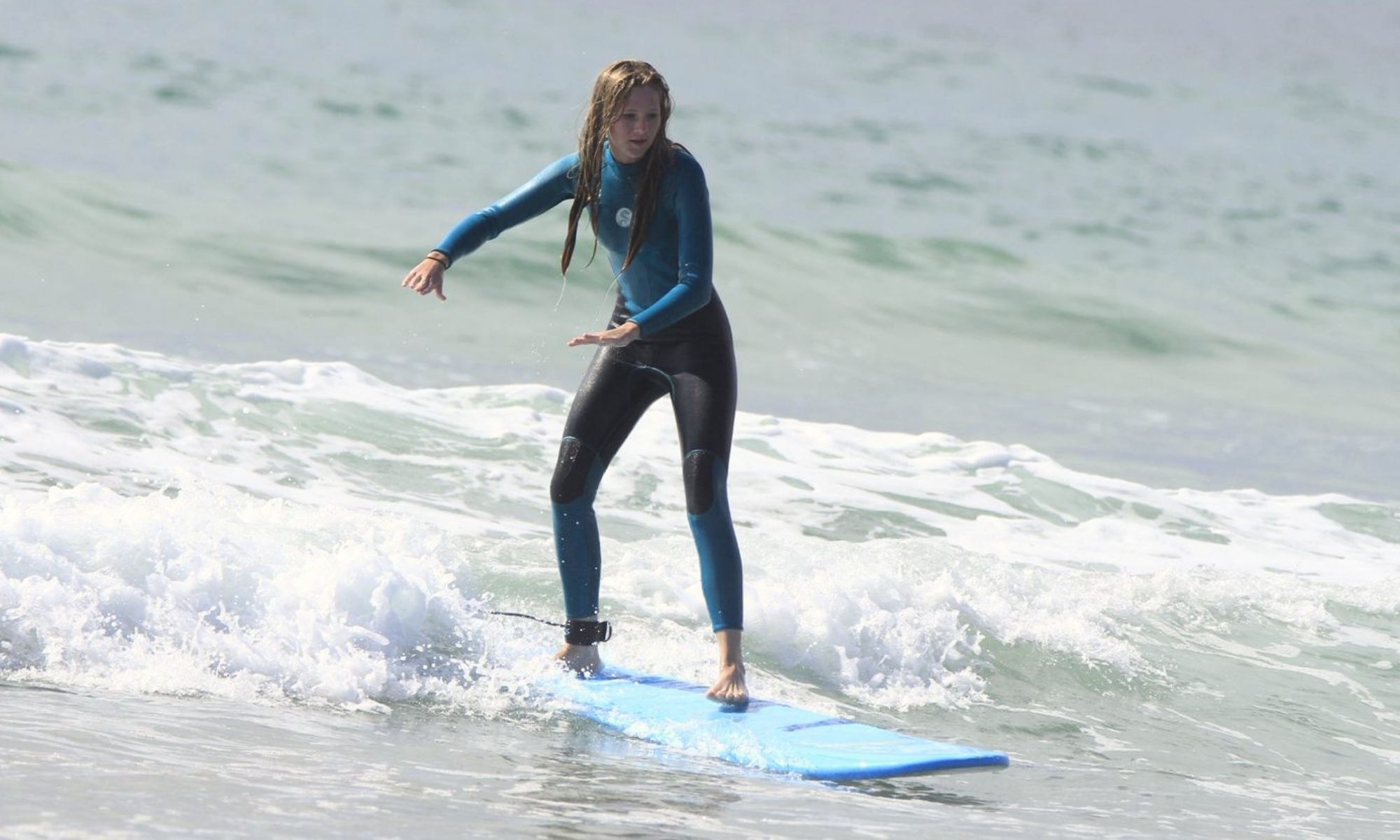
On a sandboard, you start from a stationary position on a slope, receive a gentle push, and ride down. The technique is forgiving. The sand is soft. You can stop yourself at any point, and there is no timing, no paddling, no balance challenge comparable to standing on a moving surfboard in the ocean.
Surfing involves more variables: wave selection, paddling speed, precise pop-up timing, balance on an unstable surface, and the constant adjustment of an ocean environment. This is what makes learning to surf genuinely satisfying — but it is objectively harder than sandboarding.
The Fear Factor: Which Feels Less Intimidating?
For many first-timers, the psychological barrier to surfing is the ocean itself: the waves, the depth, the unknown. Even if conditions are calm and well-chosen, being in the water for the first time on a surfboard feels unfamiliar.
Sandboarding removes that entirely. You are on land, in daylight, with the Atlantic visible but safely below you. The only variable is the slope of the dune. Most people describe sandboarding as fun from their first run — there is almost no learning curve to fight through before the experience becomes enjoyable.
This does not make sandboarding “better.” It makes it different. The challenge of a surf lesson is part of what makes it rewarding. But if your concern is trying something completely new in an unfamiliar environment, sandboarding removes more barriers to entry.
Which Is Better for Your Group?
For Couples
Both activities work well for couples. If one person is sporty and one is less confident in the water, sandboarding is the more comfortable choice together. If you both want to try surfing, a beginner surf lesson is a memorable shared experience — many couples describe their first surf lesson as one of the best things they did together in Taghazout.
The best scenario? Surf lesson in the morning, sandboarding at sunset. You get both experiences in one day and spend the evening watching the sun drop over the dunes with Moroccan tea in hand.
For Groups of Friends
Sandboarding is naturally a group activity. The dunes, the scenery, the banter of riding down the slope together, the group photos — it works very well socially. The journey to and from the dunes with a local guide also adds to the shared experience.
Surf lessons work better in smaller groups. The personal coaching element means smaller numbers get more out of it. If your group has mixed abilities or confidence levels, a surf lesson may fragment the experience slightly — some will progress faster than others.
For Families With Kids
Both activities are child-friendly. Sandboarding welcomes children from age 8 and requires no swimming ability, making it the safer and more inclusive family choice. Surf lessons work well for kids aged 7 and above who are comfortable in the water and able to follow instructions.
Summer specifically — with its smaller, calmer waves — is the ideal time for a family surf lesson in Taghazout. For more on this, see our guide: surf lessons in Taghazout in summer.
For Solo Travellers
Both activities work well solo. Both run in small groups with other travellers, which means you are likely to meet people regardless of which you choose. Sandboarding tends to generate more group conversation and socialising during the experience itself. A surf lesson is more individually focused — you are working on your own progression, with company nearby.
Which Gives You the Best Photos and Memories?
Be honest with yourself about what you want to take away from Taghazout.
Sandboarding produces spectacular images. The golden light of the Timlalin Dunes at sunset, the vast sand slopes, the Atlantic Ocean in the background, and the silhouettes of people riding down the dunes — the photographic conditions are exceptional. Your guide takes photos and videos during the session. Most people come away with genuinely impressive shots without any effort.
Surf lesson photos are action shots: someone getting wet, catching a wave, wiping out, laughing on a board. They capture real moments of effort and progress. They are not as visually dramatic as the dune shots but they are often more personally meaningful — because you did something you were not sure you could do.
If photos matter to you and your primary goal is beautiful, shareable images of Morocco, sandboarding has the visual edge. If you want to capture the memory of learning a skill, the surf lesson wins on personal significance.
Can You Do Both in a Single Day? (Yes — Here's How)
This is the part most people miss.
The Same-Day Combination: Morning Surf, Evening Dunes
The schedules of these two activities were built around each other without most visitors realising it.
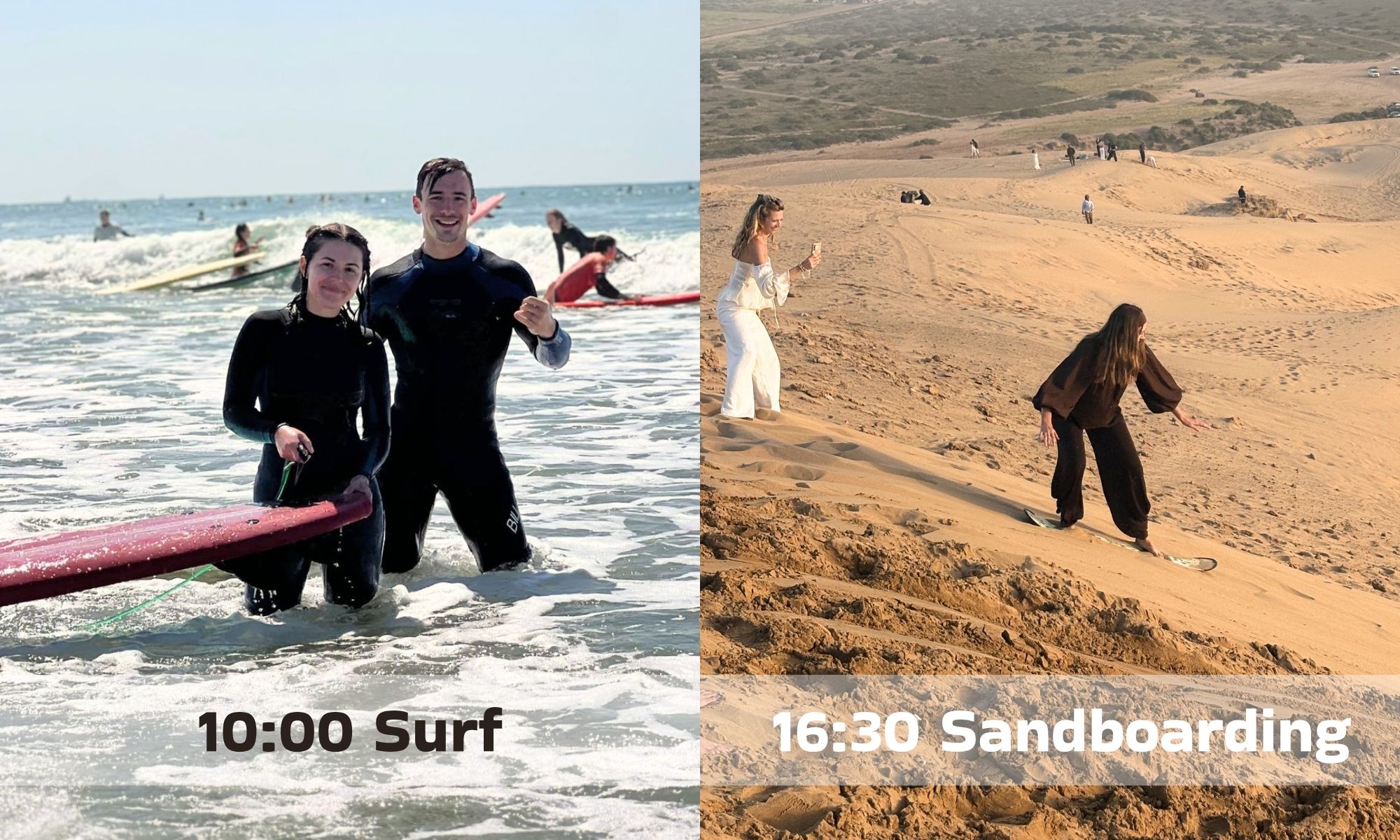
A surf lesson runs at 10:00 and finishes by 12:30–13:00. You have the rest of the afternoon free: lunch in Taghazout, a rest, exploring the village or the coast.
Sandboarding pickup runs at 16:00–16:30 and you are back by 21:00–21:30.
There is a comfortable gap of three to four hours between the end of your surf lesson and the start of your sandboarding trip. You have time to eat, shower, and rest before the dunes. Both activities sit in completely different parts of your day — ocean in the morning, desert at sunset.
Why This Works So Well
The surf lesson wakes you up to Taghazout’s ocean identity. The sandboarding trip shows you a side of Morocco that most travellers who stay on the beach never see. Together, they give you two genuinely different environments, two different groups of people, two different memories — all within a single full day.
Both experiences cost €29 per person. Can’t choose? The Surf + Sandboarding combo is €49 per person — both in one day for less than booking separately.
If you want to do both: book the surf lesson first (morning), confirm your pickup time for sandboarding in the same WhatsApp message, and we will sort the rest.
⭐ 5.0 on Google · Top Rated Local Guides · Small Groups · 230+ Reviews · Pickup available
Which One Should You Book First?
If you only have one day or one afternoon and genuinely cannot do both, here is the honest guide:
Choose the surf lesson if:
- You have always been curious about surfing and want to actually try it
- You want a physically active experience
- You are comfortable in the water or want to become more so
- You are staying for more than two days and can do sandboarding on a different day
- You want to come away having learned something
Choose sandboarding if:
- You want a low-effort, high-reward experience that anyone in your group can enjoy
- You want spectacular sunset photos
- You are travelling with children, non-swimmers, or people who are nervous about the ocean
- You have limited energy or physical capacity
- You want to experience a side of Morocco that goes beyond the beach
Choose both if:
- You have a full day free
- You want to make the most of your time in Taghazout
- You are the kind of person who tends to regret not doing things
If you are still undecided, see our full guide to the best Taghazout activities for first-time visitors for a broader picture of everything available — or browse all options in our complete guide to things to do in Taghazout.
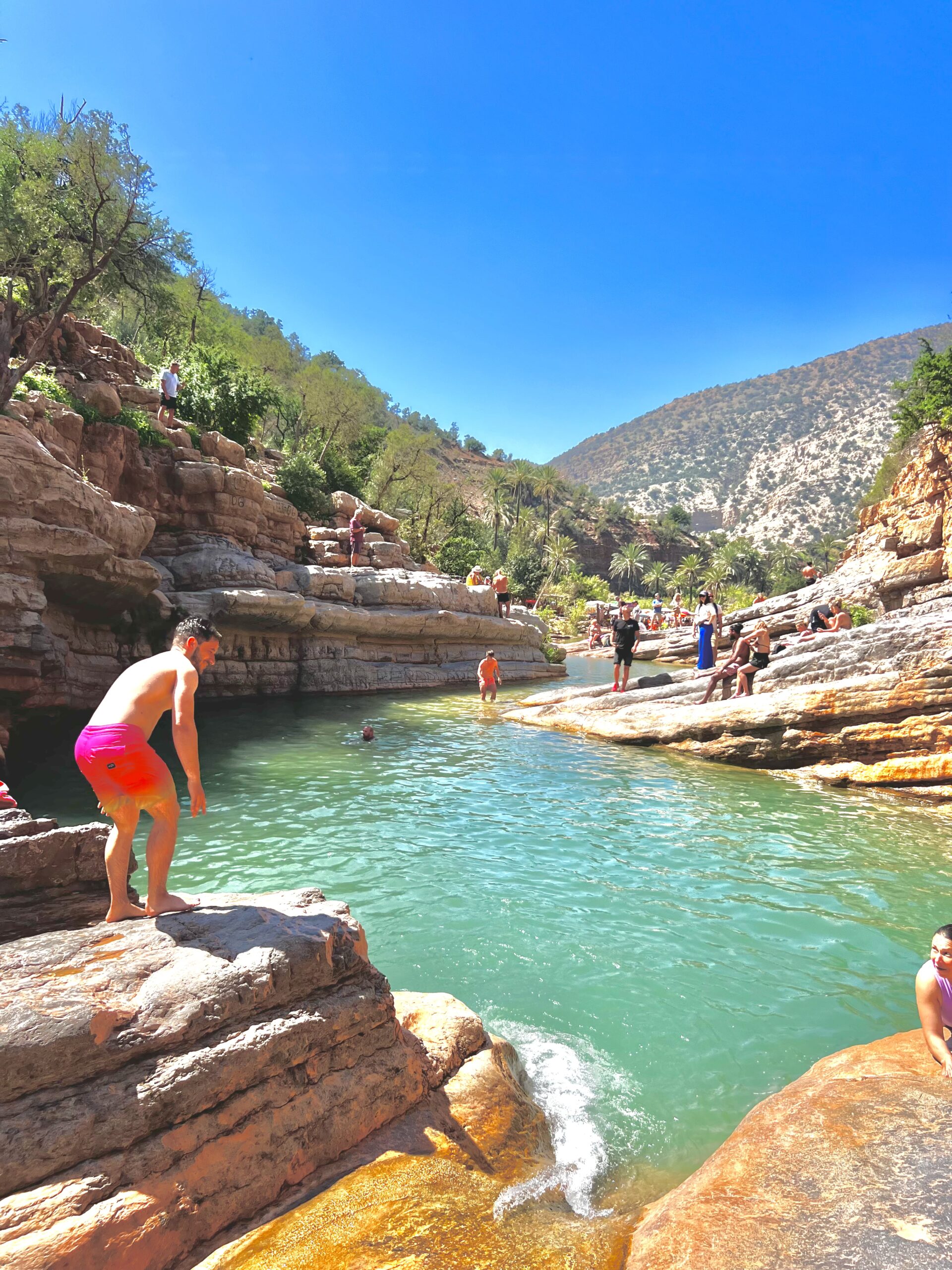
And if neither feels right for today — maybe you want something away from the coast, something calmer, something with no sand in your shoes and no ocean to navigate — there is a third option most visitors only hear about once they arrive. Paradise Valley is a half-day in the Atlas Mountains: natural rock pools, a palm canyon, a traditional argan cooperative, and a completely different side of Morocco. It runs in the morning or afternoon, does not require any physical fitness or swimming ability, and combines well with both a surf lesson and a sandboarding trip on separate days. Still not sure whether it is worth the trip? Is Paradise Valley worth it? — an honest answer, season by season.
Frequently Asked Questions: Sandboarding or Surf Lesson Taghazout?
What is the main difference between sandboarding and a surf lesson in Taghazout?
A surf lesson takes place in the ocean in the morning — you learn to ride waves with a local instructor. Sandboarding takes place at the Timlalin Dunes at sunset — you ride sand slopes, enjoy the desert scenery, and watch the sun go down over the Atlantic. They are completely different in environment, timing, and physical demand.
Is sandboarding easier than surfing?
Yes. Sandboarding requires very little technique or physical fitness. You receive a push, ride down the dune, and walk back up. Surfing involves paddling, timing a pop-up, and maintaining balance on a moving wave — it is more demanding but also more rewarding in terms of skill development.
Can I do both a surf lesson and sandboarding on the same day in Taghazout?
Yes — this is actually the most popular combination. Surf lessons run at 10:00 and finish by 13:00. Sandboarding pickup is at 16:00–16:30. You have a comfortable gap to eat and rest between the two. Many guests do both in a single full day.
Which activity is better for someone who is not sporty?
Sandboarding. No physical fitness, swimming ability, or prior experience is required. It is genuinely accessible to all fitness levels and ages. Surf lessons are more suitable for people willing to make a physical effort in the water.
Which is better for families with children?
Both are family-friendly. Sandboarding is more universally accessible — children from age 8 can join regardless of swimming ability. Surf lessons work well for children aged 7+ who are comfortable in the water. In summer, the smaller waves make surf lessons particularly good for families.
How much does each activity cost?
Each activity costs €29 per person, including all equipment. Combined, a surf lesson and sandboarding trip on the same day costs €49 per person.
Which activity produces better photos?
Sandboarding. The golden light of the Timlalin Dunes at sunset, the ocean backdrop, and the wide-open dune landscape create exceptional photography conditions. Surf lesson photos are more personal but less visually dramatic.
Do I need experience for either activity?
No experience is needed for either. Both are designed for complete beginners, and both include equipment and local guidance.
Which activity takes longer?
Sandboarding is longer — approximately 4.5 to 5 hours including transport and the return journey. A surf lesson lasts around 2.5 to 3 hours.
Can I do sandboarding if I am afraid of the ocean?
Yes. Sandboarding takes place in the dunes, not the ocean. No swimming ability is required. The ocean is visible in the distance and the setting is beautiful, but there is no water involvement.
Is there a discount for booking both activities?
Both activities are priced at €29 per person – a combination of a surf lesson and a sandboarding trip to the Mini Sahara on the same day are 49 € per person. Message us on WhatsApp with your plan — we will confirm both in one conversation and make the logistics as easy as possible
How do I book both activities?
The easiest way is WhatsApp. Send us your date, number of people, and where you are staying. Tell us you want to do both — we will confirm the surf lesson time, the sandboarding pickup, and any shared logistics in the same message.
I've already done a surf lesson — is sandboarding Taghazout still worth it?
Yes — and not just as a consolation activity. Sandboarding is a completely different experience from surfing: different terrain, different movement, different time of day, and a different side of Morocco entirely. The surf lesson gives you the ocean in the morning; sandboarding gives you the Saharan dunes at sunset with the Atlantic behind you. Most guests who do both say they feel like two separate trips compressed into one day. If you have already surfed in Taghazout and are looking for something to fill your afternoon or evening, sandboarding is the obvious next step — not a backup plan.
Looking for more things to do in Taghazout?
Apart from sunset sandboarding or surf lessons Taghazout has a lot more to offer. You’ll find surf lessons, Paradise Valley trips, day trips, and other local experiences around Taghazout and Agadir. Check out these fun activities for the best things to do in Taghazout!
Paradise Valley from Taghazout
Swim, relax, and enjoy one of the most popular nature trips near Taghazout, Tamraght and Agadir.
Best Things to Do in Taghazout
Discover the top activities, local experiences, and hidden gems in and around Taghazout, Tamraght & Agadir.
Explore Day Trips from Taghazout
Explore Essaouira, Marrakech and more with easy day trips from Taghazout, Tamraght and Agadir.