Surf Lessons in Taghazout in Summer: Why It's the Best Time to Start
Most people planning their first surf lesson have one quiet worry they don’t always say out loud: what if I can’t do it?
And if you are planning a trip to Taghazout in June, July or August, you might have a second one: are summer waves even worth it?
The honest answer to both questions is the same. Summer in Taghazout is not a compromise. For a complete beginner, it might genuinely be the best possible time to learn. This guide explains why — and gives you a clear picture of what to expect from a surf lesson in Taghazout in summer, from the water temperature to the wave size, the morning heat, and how quickly real progress tends to happen.
Ready to learn to surf in Taghazout this summer? Book your surf lesson in Taghazout! For a full overview of surf lessons and pricing, see our complete guide to surf lessons in Taghazout.
Is Summer a Good Time for Surf Lessons in Taghazout?
Yes — and for beginners specifically, summer is arguably the ideal season.
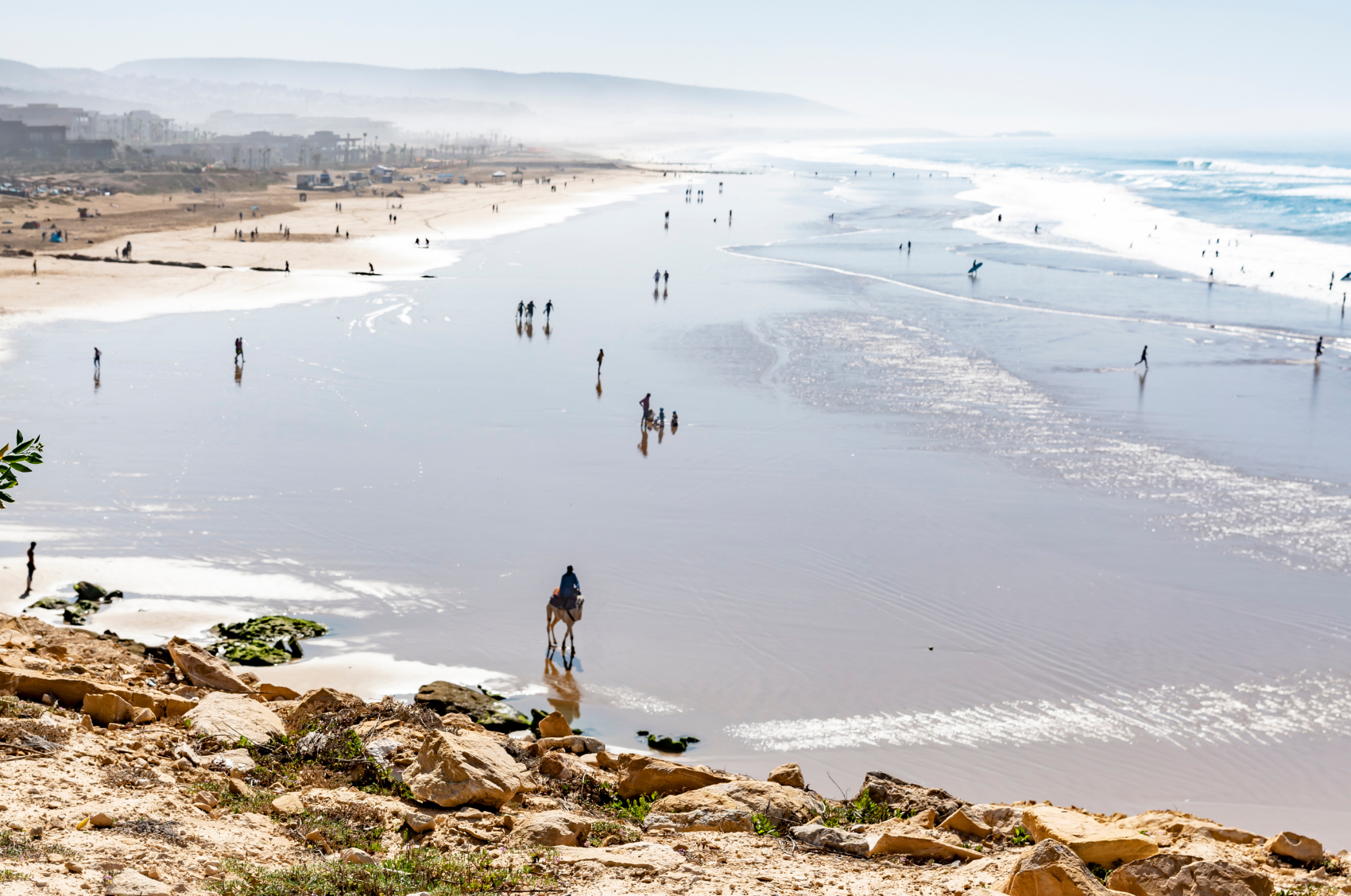
Between June and August, the Atlantic coast around Taghazout produces smaller, softer, more consistent waves than at any other time of year. Water temperatures reach 21–23°C. The weather is warm and sunny. Sessions are comfortable, conditions are predictable, and the ocean feels genuinely inviting rather than intimidating. For someone who has never stood on a surfboard before, that combination matters more than people realise.
The reason experienced surfers sometimes describe summer as “quiet” is not that the ocean is empty — it is that the big winter swells have gone. Those same big winter swells that advanced surfers love are exactly what makes learning to surf so difficult for beginners in November or January. Remove them, and you are left with the kind of wave that actually teaches you something.
If you are planning a summer holiday in Morocco, already heading to Agadir or Taghazout, or simply looking for an outdoor experience that you will remember long after you get home — booking a surf lesson this summer is one of the best things to do when in Taghazout. Prices stay the same year-round — see our full surf lesson prices guide for a breakdown of every option.
Not sure yet? Click below to see all surf lesson options and pricing or ask us a question on WhatsApp — no obligation.
What Are the Waves Like in Taghazout in Summer?
Swell Size in June, July and August
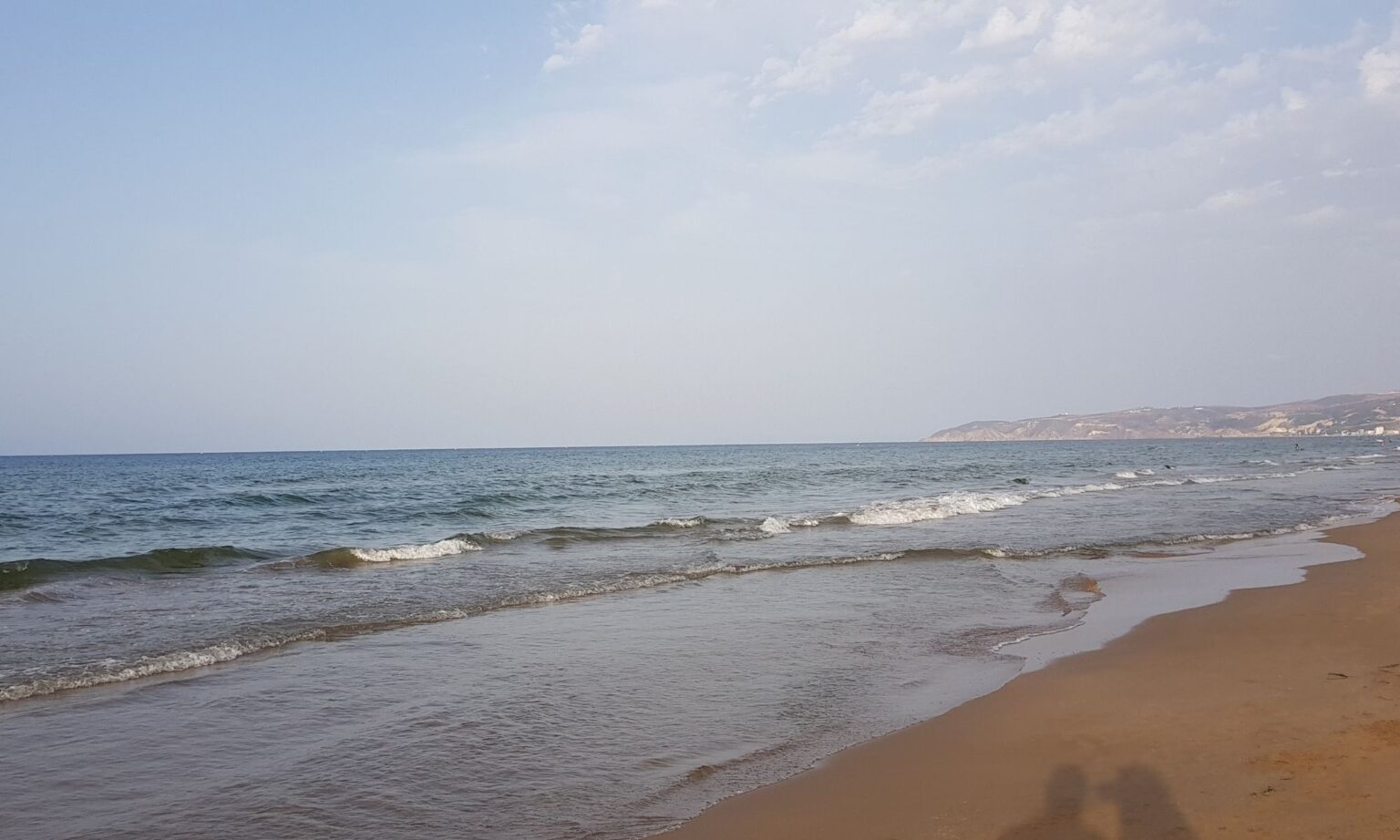
In summer, the Atlantic swells that reach the Taghazout coast typically measure between 0.5 and 1.2 metres — roughly knee to shoulder height on the right-shaped wave. Some days produce a little more, some days a little less. For context, the winter swells that bring experienced surfers from across Europe can reach three or four metres at spots like Anchor Point. Those waves are spectacular to watch. They are not for beginners.
The summer waves you will experience during your lesson are typically smooth, well-spaced, and consistent. Your instructor will know where to position you to catch the most suitable waves for your level, and in summer, those waves are genuinely plentiful.
Wind Conditions in Summer
Summer mornings in Taghazout are often calm. Wind tends to pick up in the afternoon as temperatures rise. This is one reason surf lessons typically run in the morning — not just because of the heat, but because the ocean surface is usually cleaner and more manageable before midday. Your instructor knows the timing. That is part of what local knowledge provides.
Crowds on the Water
Summer brings more tourists to Taghazout, but the actual surf line-ups tend to be less crowded than in winter, when experienced surfers arrive from all over Europe. The popular advanced surf breaks get busy in winter, not summer. For beginner lessons, the beaches used for teaching are chosen based on daily conditions and group size — not on where the experienced crowd is gathering.
SURF LESSONS TAGHAZOUT
Ready to book your summer surf lesson?
Small groups · equipment included · pickup available from Taghazout, Tamraght & Agadir ⭐ 5.0 on Google · 230+ real reviews
Tip: Send your date + number of people + where you’re staying — we reply fast.
Why Small Waves Are Perfect for Beginners (Not a Disadvantage)
This is the part most first-timers get wrong when they research surf destinations.
Why Big Waves Slow Beginners Down
When waves are large and powerful, there is less time to think. Paddling becomes harder. Timing a pop-up on a fast, steep face is significantly more difficult than on a slower, gentler wave. Wipeouts happen more often and with more force. Confidence takes longer to build. The fear response is higher.
For someone learning the basics — understanding how to paddle, how to feel the wave lift the board, how to place your hands, when to push up, where to look — all of that is easier and faster to learn on a smaller wave. You get more attempts. You get more feedback. You build muscle memory without the anxiety of being thrown around.
How Softer Surf Builds Real Technique
Beginner surf coaching in summer focuses on the fundamentals: your pop-up technique, your stance, your balance, and how to read and choose the right wave. These are the foundations that every surfer builds on. Small, clean waves let you practice these fundamentals repeatedly in one session. That repetition is what creates progress.
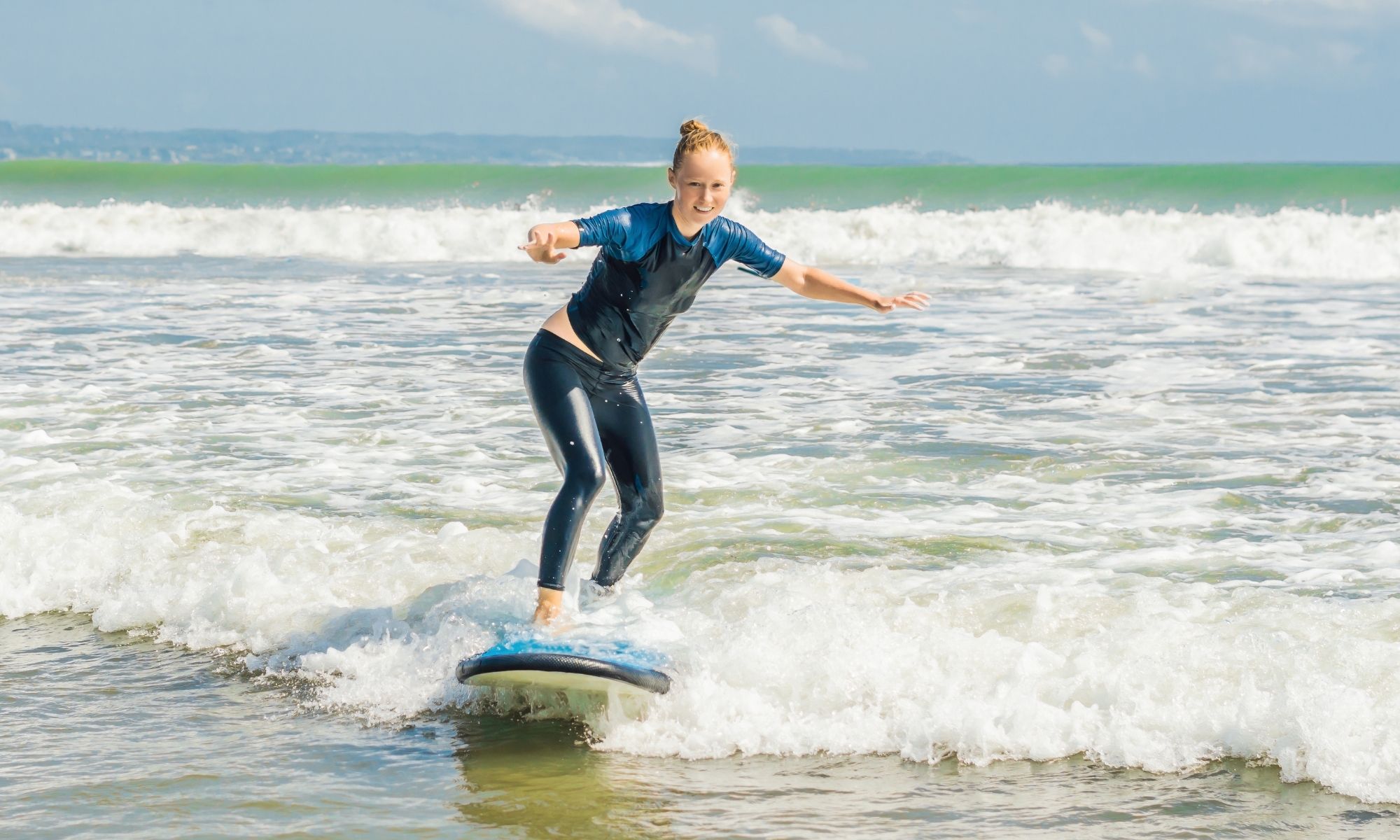
Many guests who take their first surf lesson in Taghazout in summer are surprised by how much they actually do in one session. Standing up, catching a wave, riding to shore — it happens faster than they expected. The conditions make it possible.
The Progress You Can Expect in Three Sessions
By the end of a first lesson, most beginners have stood up at least once and have a clear understanding of the basics. By the end of a second or third session, most people are catching waves more consistently, choosing their moment better, and starting to feel genuinely comfortable in the ocean. That kind of progress over a summer week in Taghazout is entirely realistic.
How Warm Is the Water — and Do You Still Need a Wetsuit?
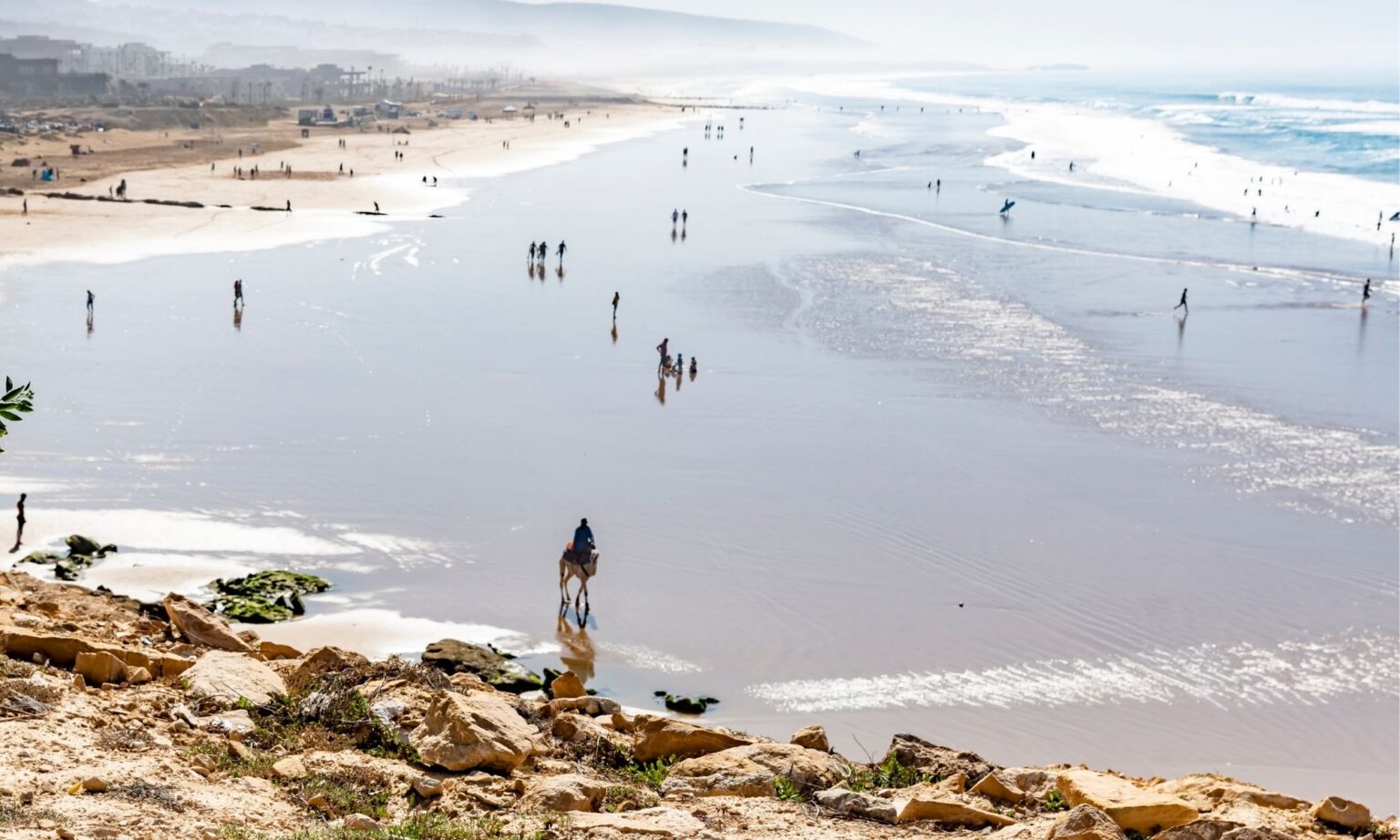
In July and August, the water temperature along the Taghazout coast typically sits between 21°C and 23°C. That is warm enough to surf comfortably in a short wetsuit or springsuit. Some people find it perfectly comfortable in just board shorts or a swimsuit, depending on their sensitivity to cold and how long they are in the water.
For a 2–3 hour lesson with active paddling and wave-catching, a light wetsuit is usually recommended because it protects against the friction of the surfboard, not just the water temperature.
All equipment, including the wetsuit and surfboard, is included in your lesson with us. You do not need to bring anything except what we outline in the packing section below.
The air temperature in summer is typically 27–32°C at the beach. You will not feel cold between waves.
What a Summer Surf Lesson in Taghazout Actually Looks Like
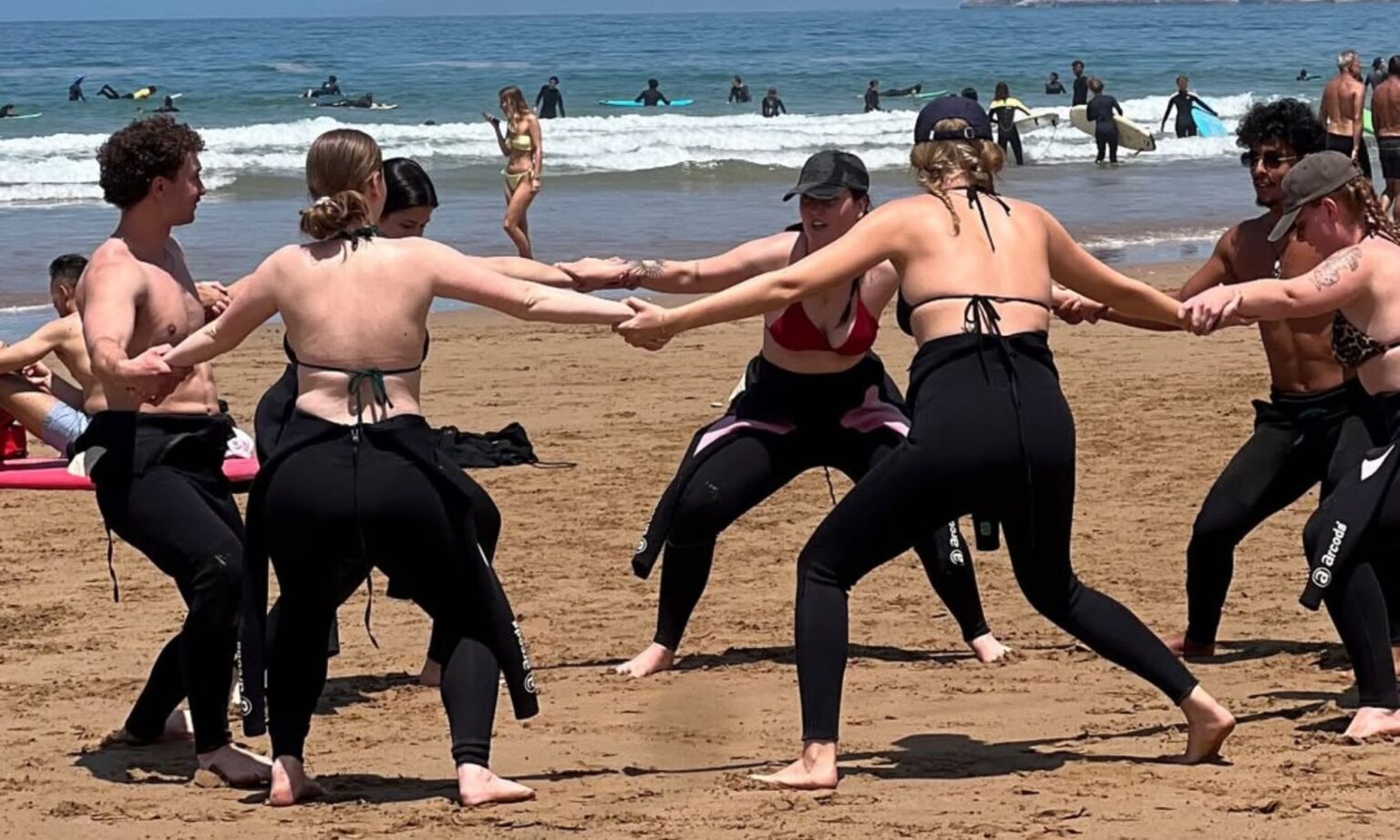
Morning vs Afternoon — Which Is Better?
Morning sessions, which typically start around 10:00, are the most popular in summer. The wind is lower, the ocean surface is usually cleaner, and the temperature is comfortable rather than punishing. By early afternoon, temperatures can make standing on the beach during the land coaching portion feel hot. Morning is the better choice for your first lesson.
What Happens on the Beach Before You Enter the Water
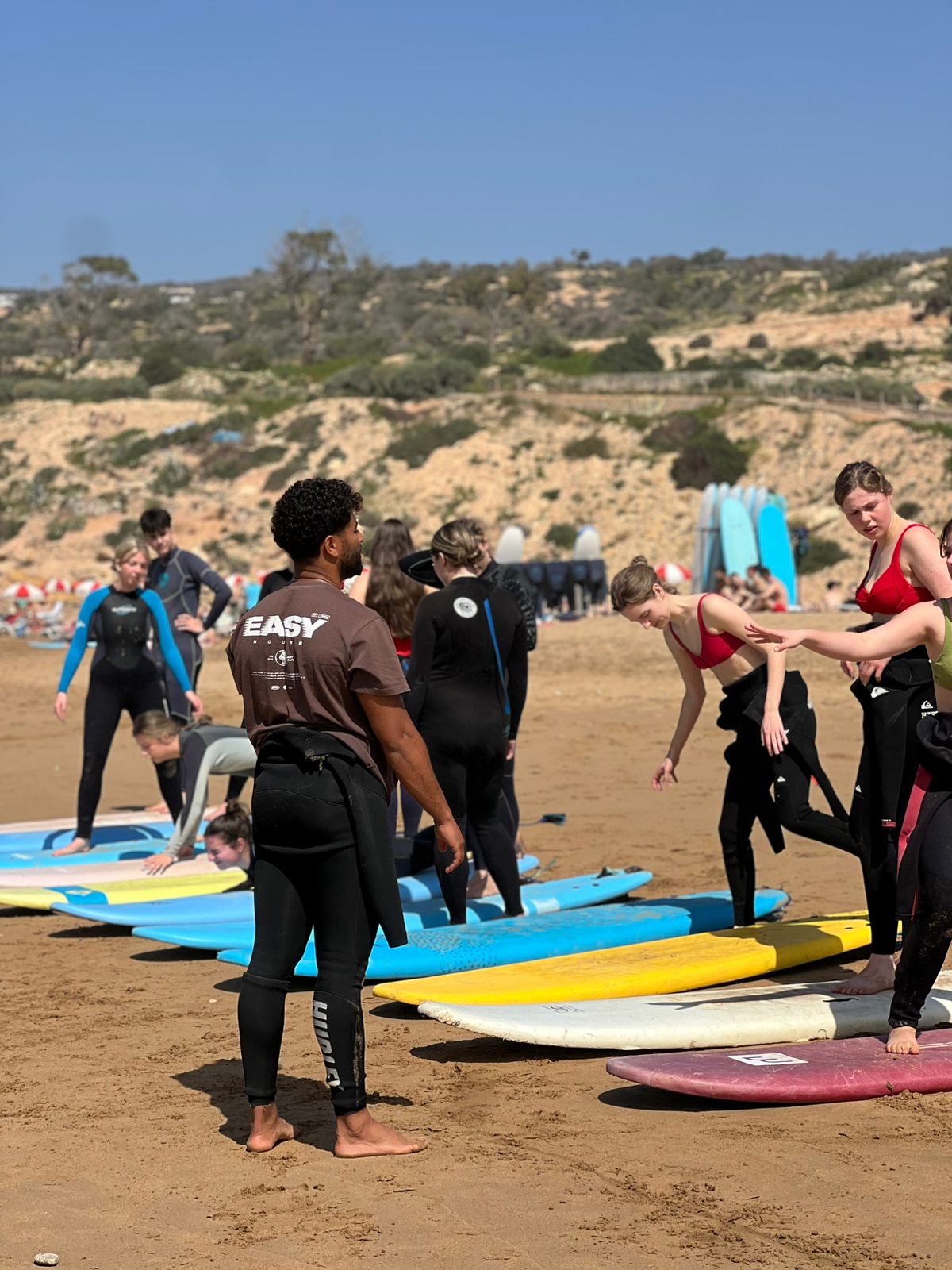
Every lesson begins on dry land. Your instructor takes you through a warm-up, shows you the correct board position, and walks you through the pop-up technique on the sand before you go anywhere near the water. This is not filler — it is the most important part of a first lesson. The beach coaching is where your body learns what it needs to do automatically once you are in the ocean.
You will practice the pop-up multiple times on the sand. You will learn the safety rules: how to fall safely, how to protect your head when a wave passes over you, how to handle the board in the water. When you eventually enter the ocean, you already know what you are doing.
For a detailed breakdown of what happens step by step, read our guide: What to expect from your first surf lesson in Taghazout.
What Your Instructor Does in the Water
Your surf instructor does not stand on the beach watching you struggle. During a good beginner lesson, your instructor is in the water next to you, helping you position yourself in front of an approaching wave, giving you the push that adds momentum, and telling you exactly when to pop up. They watch your technique, give immediate feedback, and adjust their coaching to what you specifically need.
Small group sizes matter here. The smaller the group, the more time you spend catching waves rather than waiting in line.
★★★★★
5.0 Rated on Google
Based on 230+ reviews
“
Had such an amazing surfing experience in Taghazout! I learned a lot and even managed to stand up on the board for the first time.
Tamara, Google review, May 2026.
230+ Google reviews
How Many Lessons Do You Need to See Real Progress?
After Your First Lesson
By the end of your first lesson, you will have had your first real taste of wave-riding. Most beginners stand up for the first time during this session. Even if it does not happen, you will have a clear understanding of what you need to work on and will feel noticeably more comfortable in the ocean than when you started.
After Three Lessons
Three sessions is where real confidence starts to develop. You will be selecting waves more independently, popping up with more consistency, and beginning to understand the rhythm of the ocean. Three lessons across a week in Taghazout is the most common pattern among guests who genuinely want to progress — and it works. If you are planning to surf more than once during your stay, our surf lesson packages in Taghazout are the most straightforward way to book all three sessions at once.
The Right Mindset for Faster Progress
Surfing is not a sport where you become good quickly. That is part of what makes the first time you ride a wave properly feel so satisfying — it took effort. The best thing you can do in your first few lessons is stay relaxed, listen to your instructor, and resist the urge to rush. The ocean will not move faster because you want it to. Breathe, wait for the right wave, and trust the process. The summer conditions in Taghazout make this mindset easy to hold.
SURF LESSONS TAGHAZOUT
Ready to book your summer surf lesson?
Small groups · equipment included · pickup available from Taghazout, Tamraght & Agadir ⭐ 5.0 on Google · 230+ real reviews
Tip: Send your date + number of people + where you’re staying — we reply fast.
Can Families and Kids Do Surf Lessons in Taghazout in Summer?
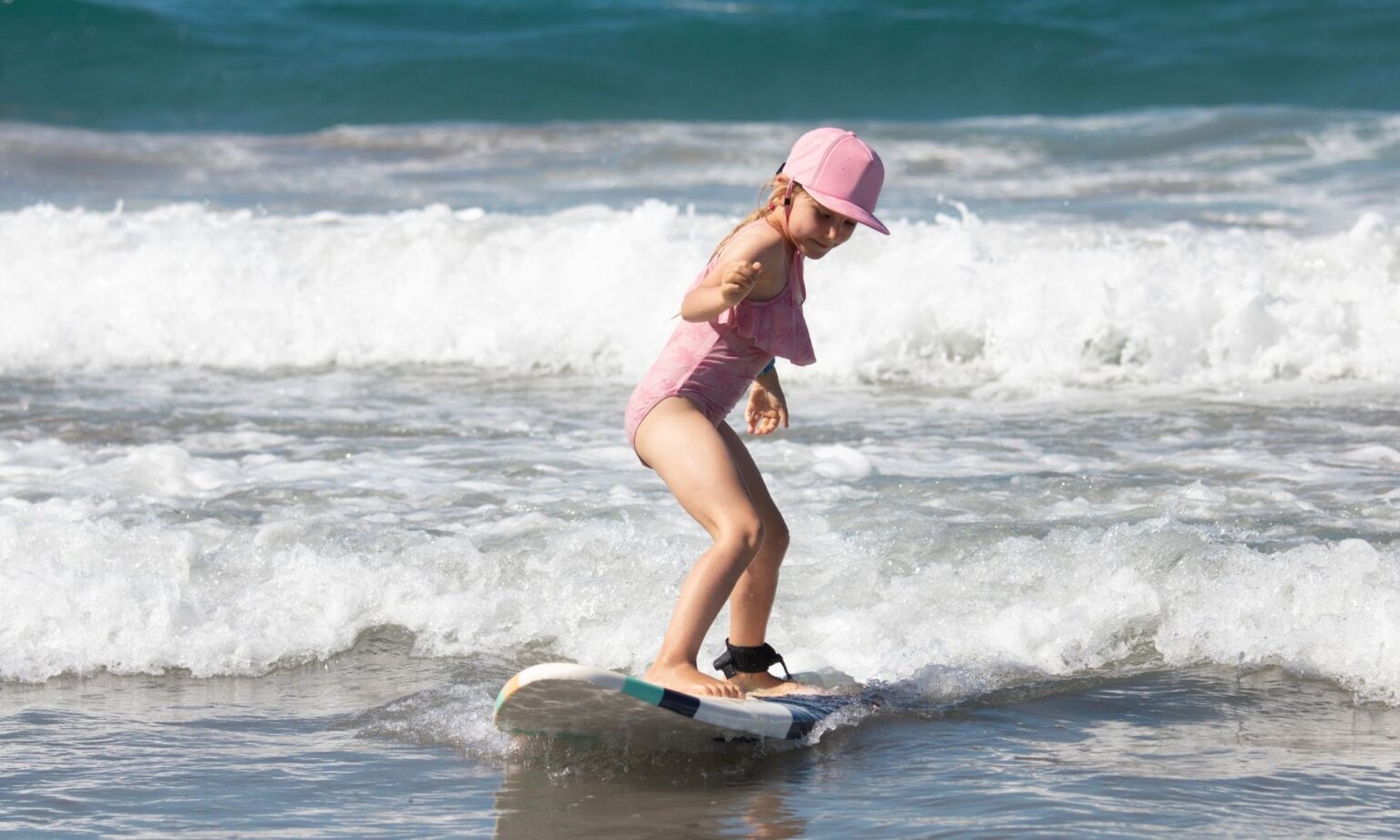
Yes, and summer is the best time for it.
The combination of calm, smaller waves, warm water, and reliable sunshine makes summer ideal for families with children. Kids aged seven and above who are comfortable in the water can join a beginner group lesson. The conditions are safe, the instructors are experienced with younger students, and the progression is often surprisingly fast — children tend to lose their inhibitions on the board much faster than adults.
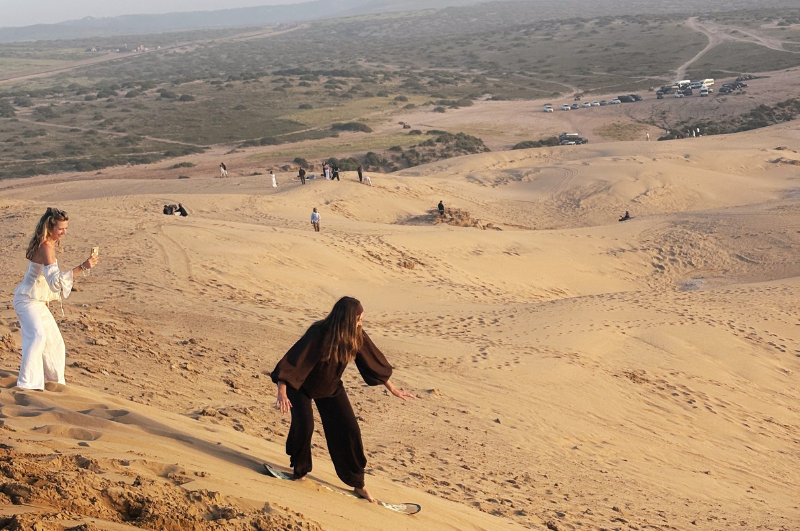
For couples or groups where one person wants to surf and another does not, Taghazout works well in summer precisely because there are many other activities available on the same day. While one member of your group takes a morning surf lesson, the other can explore the village, visit the market, or simply sit on a rooftop terrace. In the afternoon, you could both go sunset sandboarding in the Timlalin Dunes — one of the most popular activities near Taghazout. It is a genuinely good summer day.
If you are travelling with non-surfers or planning a mixed-group holiday, read our local guide on things to do in Taghazout if you don’t surf.
What to Pack for a Summer Surf Lesson in Taghazout
You do not need much. The surfboard and wetsuit are included. Bring:
- Swimwear — worn under the wetsuit
- High-SPF sunscreen — apply before you get dressed, especially to your face, neck and the back of your hands
- A large towel — for after the session
- Water — at least one litre per person; the heat and physical effort will make you thirsty
- Dry clothes — for after the lesson, when you will be warm and want to change
- A hair tie if you have long hair
- Light snack — optional, but useful for morning sessions before a late breakfast
Leave the expensive camera at the accommodation unless you have a waterproof case or someone staying on the beach to hold it. Salt water and cameras do not mix.
If you are visiting in late June or early September, the water can be slightly cooler on some days — the wetsuit provided will handle this completely.
What to Do After Your Surf Lesson Taghazout
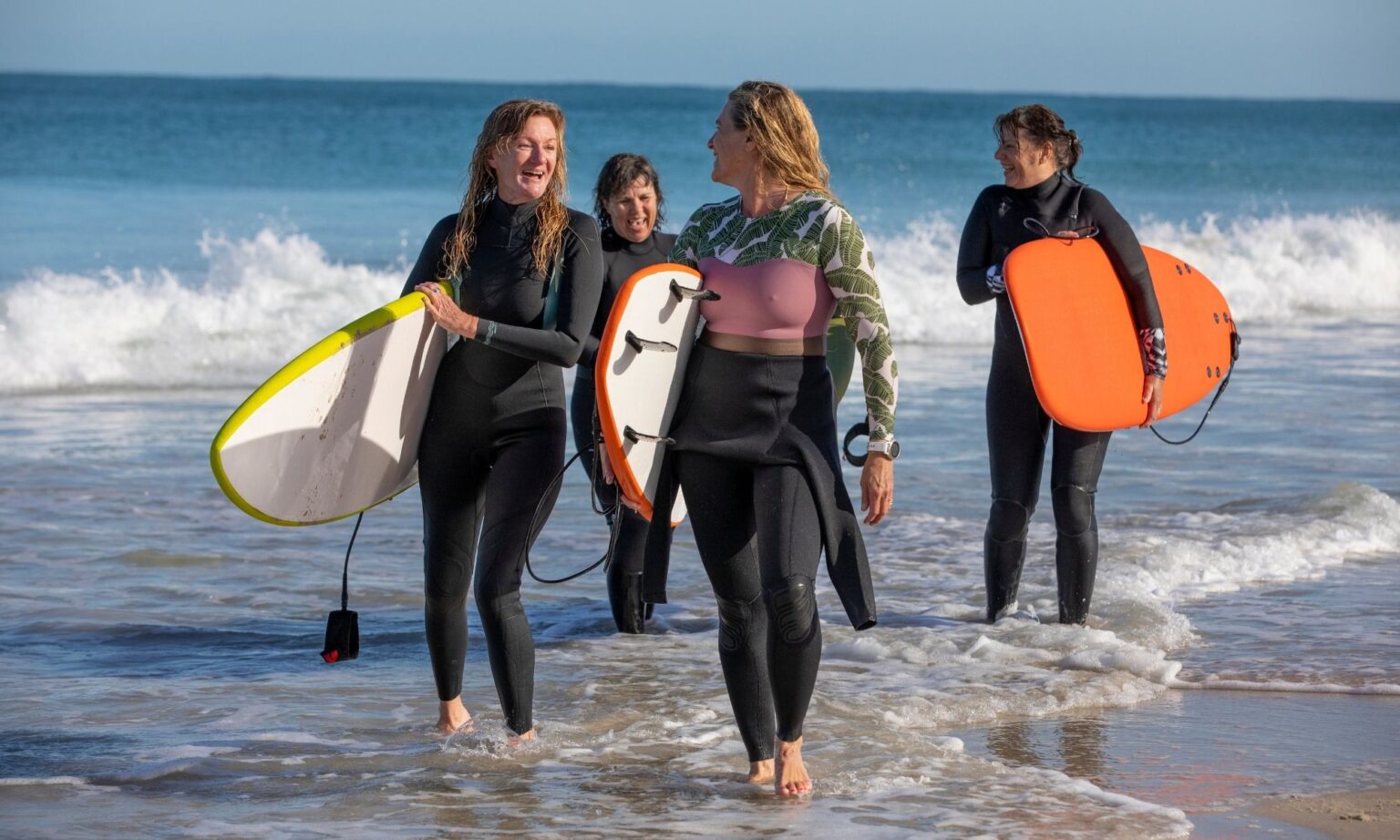
One of the genuinely underrated things about a summer surf lesson in Taghazout is what happens next.
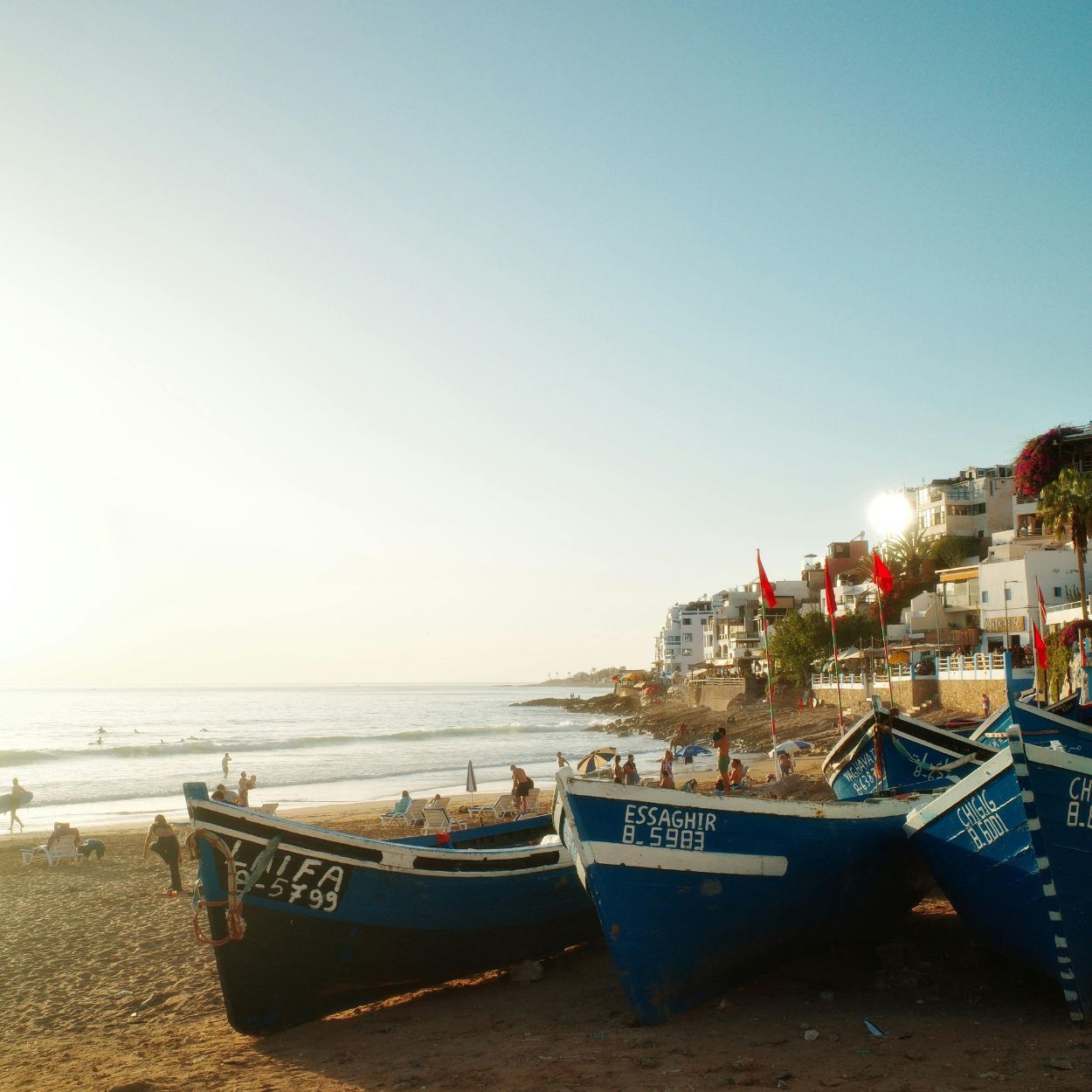
You finish your session, rinse off, and suddenly you have the rest of a warm Moroccan day ahead of you. The village is small enough to walk around in twenty minutes, but there is enough in it to fill an afternoon: local cafés with ocean views, small food spots for a fresh Moroccan lunch, markets, and the constant gentle background of surf culture that gives Taghazout its particular atmosphere.
Many guests combine a morning surf lesson with an afternoon or evening activity. The most popular combination is sunset sandboarding in the dunes near Taghazout — a completely different experience that starts about two hours before sunset and takes you into the Timlalin Dunes where you ride a sandboard down the face of a sand dune with the Atlantic behind you. It is one of the best things you can do in this part of Morocco.
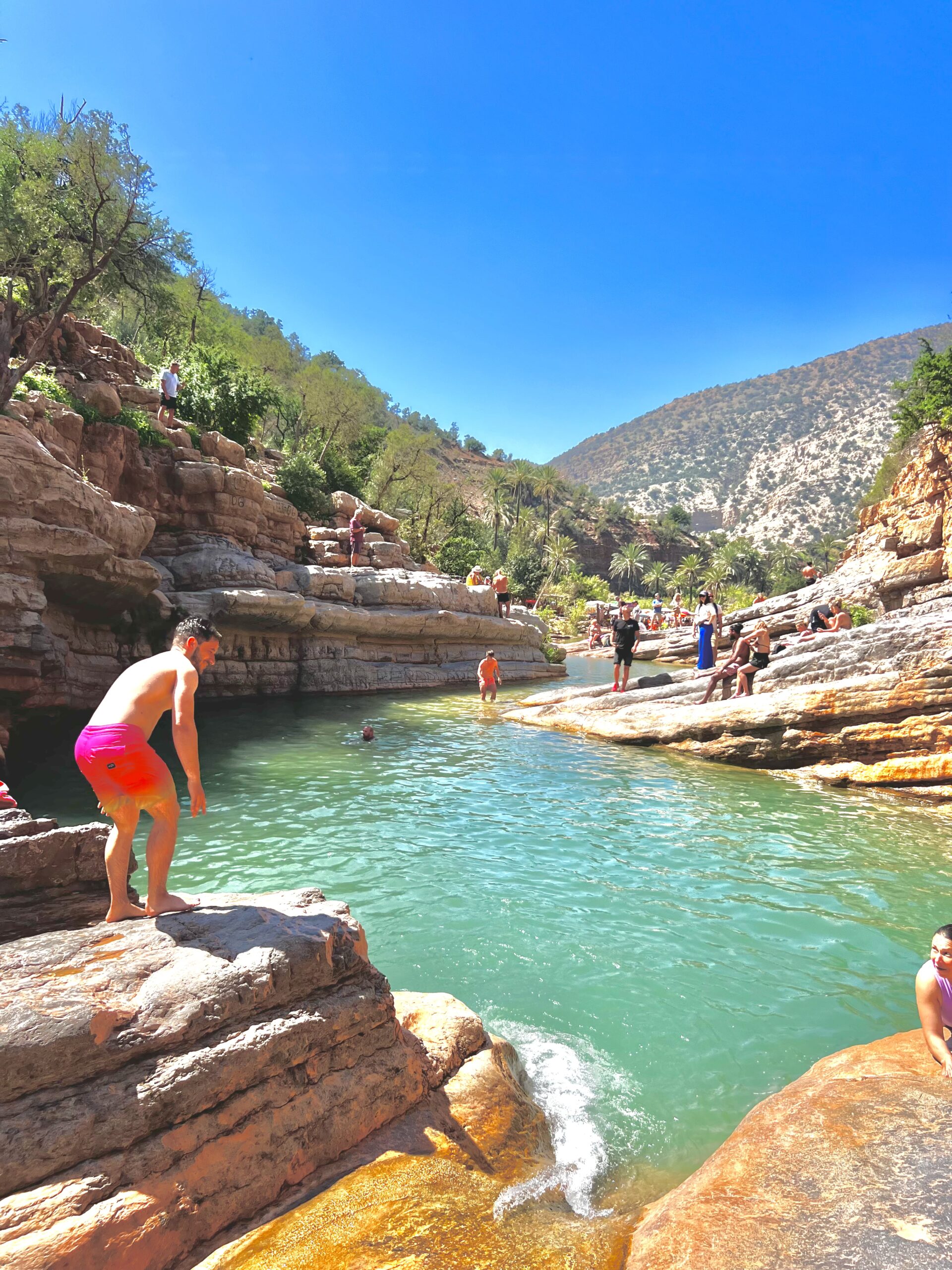
Other popular add-ons include a Paradise Valley trip — a natural gorge with pools, palm trees and a very different kind of afternoon — or simply exploring Taghazout and Tamraght on foot. For a full list of what is available, see our guide to things to do in Taghazout.
How Much Are Surf Lessons in Taghazout in Summer?
Surf lesson prices in Taghazout are the same in summer as in the rest of the year — there is no seasonal surcharge. A group lesson costs €29 per person including board, wetsuit and instructor. Private lessons cost €39 per person (max 2 people). A 3-lesson package costs €69 per person. The Surf + Sandboarding combo — surf in the morning, sunset dunes in the evening — costs €49 per person instead of €58 booked separately. No deposit required for any option.
| Lesson type | Price (2026) | What’s included |
|---|---|---|
| Group lesson | €29 per person | Board, wetsuit, instructor, pickup Taghazout/Tamraght |
| Private lesson | €39 per person | Max 2 people, 3–3.5 hours, door-to-door pickup |
| 3-lesson package | €69 per person | 3 group lessons, saves €18 vs. individual |
| Surf + Sandboarding combo | €49 per person | Morning surf + sunset dunes, saves €9 |
| Agadir pickup | +€25 per car | Return, max 4 people |
Summer prices are identical to winter prices. What changes in summer is not the cost — it is the conditions. Smaller waves, warmer water, and calmer mornings mean you get more out of every session as a beginner. If anything, your €29 goes further in summer than any other time of year.
For the full breakdown — including how to avoid overpaying and what every fair offer must include — see the complete surf lesson prices guide for Taghazout 2026.
How to Book a Surf Lesson in Taghazout This Summer
Booking is straightforward. The fastest way is WhatsApp.
Send us your date, the number of people, and where you are staying — whether that is Taghazout, Tamraght, Agadir, or anywhere nearby. We confirm availability, the lesson time, and pickup if needed. Payment is cash on the day. There are no online forms, no deposit, and no complicated booking system.
Surf lessons are available year-round. In summer, availability can fill up — especially on weekends and during August. If you have a fixed date in mind, it is worth messaging a few days in advance rather than the morning before.
If you are still comparing options, read our guide on how to choose the right surf school in Taghazout before you decide. For lesson types, group sizes, pricing and full details, see the surf lesson booking page.
By the way: Summer is not the only easy season here! From late September the swell starts returning while the water stays warm, which is why a lot of people prefer surf lessons in Taghazout in autumn — September, October and November, month by month.
Frequently Asked Questions - Surf Lessons in Taghazout in Summer
Is summer a good time to take surf lessons in Taghazout?
Yes — for beginners, summer is one of the best times. Waves are smaller and more manageable, water is warm (21–23°C), the weather is reliable, and conditions are ideal for learning the fundamentals without being overwhelmed by powerful surf.
What are the waves like in Taghazout in July and August?
Typically between 0.5 and 1.2 metres — small to moderate beach break waves that are consistent and well-suited to beginner lessons. They lack the power and size of winter Atlantic swells, which is exactly what makes them good for learning.
Can I learn to surf in Taghazout if I have never surfed before?
Absolutely. Our lessons are designed from the ground up for complete beginners. You will receive beach coaching before you enter the water, and your instructor will be in the ocean with you throughout the session.
Do I need to be a strong swimmer to take a surf lesson?
You need to be comfortable in the water, but you do not need to be a competitive swimmer. Lessons take place in conditions chosen for your level, and a wetsuit provides additional buoyancy.
Is it too hot to surf in Taghazout in July or August?
Morning sessions (from around 10:00) are the most comfortable. Air temperatures are warm but not extreme at the beach, and you will spend most of your time in the water. The afternoon heat is more of a factor when standing on the beach — another reason morning lessons are recommended.
Do I need to wear a wetsuit in summer?
A wetsuit is recommended for a 2–3 hour session. It protects against board rash more than cold, and the Atlantic water, while warm in summer, can feel cooler during longer sessions. Your wetsuit is included in the lesson — you do not need to provide your own.
How long does a surf lesson last?
A standard group surf lesson lasts between 2.5 and 3 hours, including the beach warm-up, land coaching, and time in the water.
Can kids take surf lessons in Taghazout in summer?
Yes. Children aged seven and above who are comfortable in water can join a beginner lesson. Summer conditions — smaller waves, warm water — are ideal for younger surfers. Contact us via WhatsApp to discuss the best option for your group.
How many lessons do I need to actually ride a wave?
Many beginners stand up for the first time during their first lesson. Catching waves with consistency and real control usually develops over two to three sessions. If you have a week in Taghazout, three lessons spread across the week is a great goal.
What is the price of a surf lesson in Taghazout?
Group lessons start at 29€ per person, including surfboard and wetsuit. Private lessons are available at a higher price for those who want more personalised coaching for faster progress. See the full surf lesson booking page for current pricing. For a full breakdown of every lesson type and what must be included in the price, see the complete guide to surf lesson prices in Taghazout.
How do I book a surf lesson in Taghazout in summer?
Message us on WhatsApp with your date, number of people, and where you are staying. We confirm availability and details quickly. Payment is cash on the day. No deposit required.
Is pickup available for surf lessons in Taghazout?
Yes — pickup is available from Taghazout, Tamraght, and Agadir upon request. Include your accommodation details when you message us on WhatsApp.
Ready to book your surf lesson in Taghazout this summer?
Message us on WhatsApp with your date, number of people, and where you are staying. We confirm availability and details quickly — no complicated forms, no deposit, just a fast reply and a great surf lesson.
Looking for more things to do in Taghazout?
Apart from surf lessons Taghazout has a lot more to offer. You’ll find surf lessons, Paradise Valley trips, day trips, and other local experiences around Taghazout and Agadir. Check out these fun activities for the best things to do in Taghazout!
Sandboarding in Taghazout
Discover sunset sandboarding, what to expect and how to book.
Paradise Valley from Taghazout
Swim, relax, and enjoy one of the most popular nature trips near Taghazout, Tamraght and Agadir.
Best Things to Do in Taghazout
Discover the top activities, local experiences, and hidden gems in and around Taghazout.
Explore Day Trips from Taghazout
Explore Essaouira, Marrakech and more with easy day trips from Taghazout, Tamraght and Agadir.